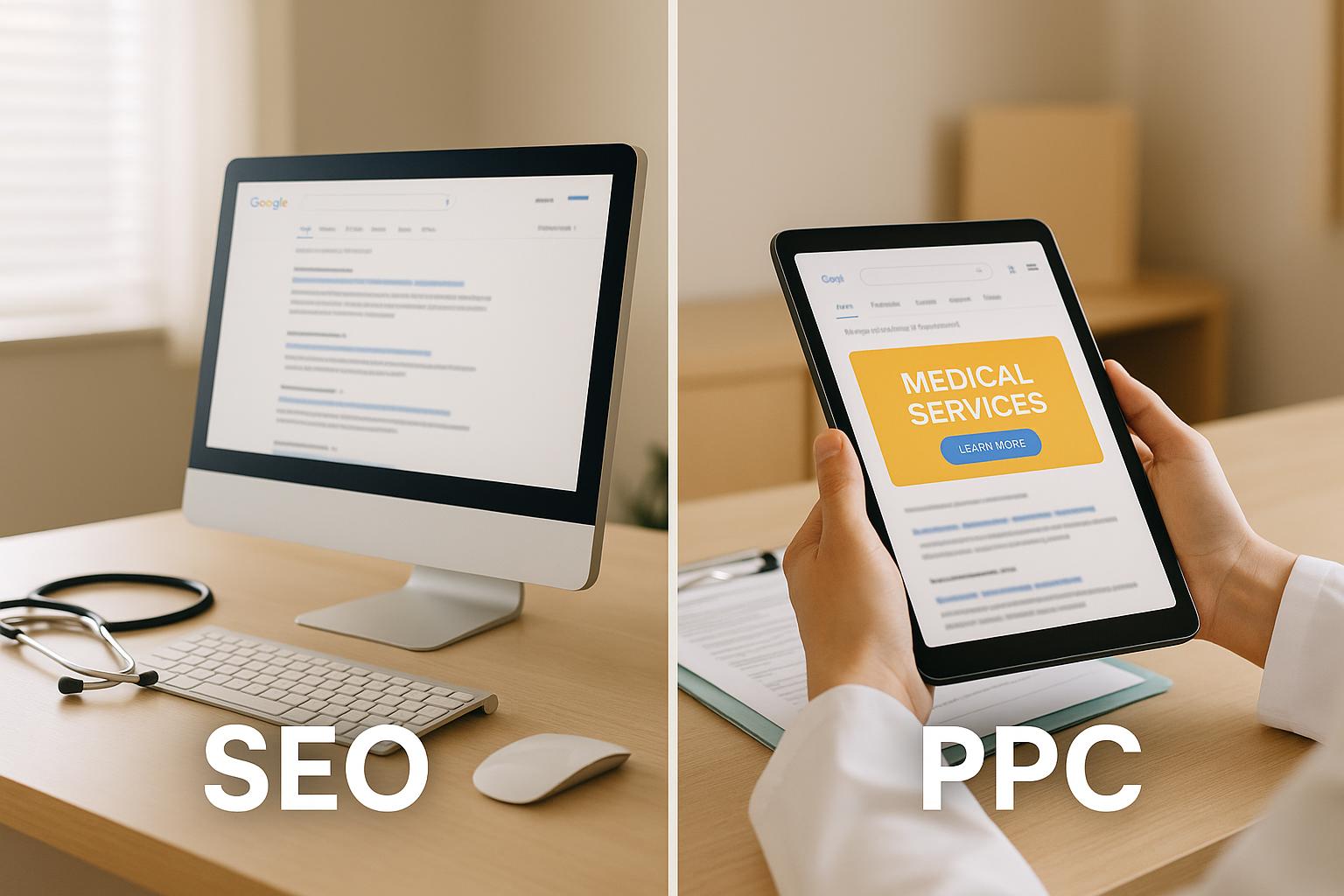
Looking to grow your medical practice online? PPC (Pay-Per-Click) and SEO (Search Engine Optimization) are two key strategies to attract patients. Here’s the bottom line:
- PPC provides fast visibility by placing your ads at the top of search results. It’s great for immediate results, like promoting new services or targeting high-intent patients searching for terms like “urgent care near me.” However, it requires ongoing spending, and the traffic stops once the budget runs out.
- SEO focuses on improving your website to rank higher in organic search results. This approach takes time (3–6 months) but builds lasting visibility and trust with potential patients. It’s ideal for long-term growth and reducing dependency on paid ads.
Key takeaway: Use PPC for quick patient acquisition and SEO for sustainable growth. A hybrid approach often works best – leveraging PPC for immediate needs while investing in SEO for steady, long-term traffic.
| Factor | PPC | SEO |
|---|---|---|
| Time to Results | Immediate | Gradual (3–6 months) |
| Cost | Ongoing spending required | Upfront investment, long-term ROI |
| Target Audience | High-intent patients | Broader audience |
| Trust | Depends on ad quality | Builds long-term credibility |
| Sustainability | Stops when funding ends | Lasting results with maintenance |
The choice depends on your goals: need patients now? Go PPC. Want steady growth? Invest in SEO.
SEO & PPC Strategies for the Healthcare Sector
Speed and Results: PPC vs SEO
Timing plays a crucial role in attracting patients. Knowing how quickly each strategy delivers results can make all the difference, especially for medical practices dealing with urgent needs or stiff competition.
PPC: Instant Visibility and Quick Results
A well-executed Google Ads campaign can put your practice at the top of search results within hours. This fast visibility can drive immediate patient inquiries, making it a go-to option for time-sensitive initiatives like launching telehealth services or promoting limited-time screenings. It’s particularly effective for practices like urgent care centers, emergency medicine, or specialists offering treatments that require immediate attention.
However, there’s a catch – this visibility lasts only as long as you keep funding the campaign. Once you stop paying, the ads disappear. In contrast, SEO offers a more lasting presence.
SEO: Building Long-Term Stability
SEO may take 3–6 months to show results, but its real strength lies in its staying power. Once your website achieves strong organic rankings, it continues to attract traffic without the per-click costs associated with PPC. This makes SEO a reliable way to drive steady traffic and long-term growth.
Take, for instance, a cardiology practice targeting keywords like "heart specialist near me." Over time, with consistent SEO efforts, the practice could secure a first-page ranking on Google. Unlike PPC, this organic visibility doesn’t vanish when you scale back on spending – provided you maintain your site and content quality.
The choice between PPC and SEO ultimately depends on whether your practice prioritizes immediate results or sustainable growth.
Choosing Between PPC and SEO for Patient Goals
Deciding between PPC and SEO often boils down to your practice’s current priorities: Do you need rapid results, or are you aiming for long-term growth?
- PPC is ideal for quick wins, such as launching a new service or addressing urgent patient needs. It’s also helpful for competitive keywords where ranking organically might take too long.
- SEO is the better choice if your focus is on building lasting visibility, establishing authority in your field, and consistently attracting patients over time. If you’re willing to invest in long-term efforts, SEO can reduce your dependence on paid advertising in the future.
Many practices find a hybrid approach works best – using PPC for immediate impact while simultaneously investing in SEO to build a solid foundation. This combination allows for quick patient acquisition while setting the stage for sustainable growth.
Ultimately, aligning your marketing strategy with your practice’s specific goals will help you make the most of both PPC and SEO.
Cost Structure and ROI: PPC vs SEO
Understanding the cost structures and return on investment (ROI) of PPC and SEO is key to shaping an effective strategy. Let’s break down how these two approaches align with your patient acquisition budget.
PPC Costs and ROI Explained
PPC operates on a pay-per-click model, meaning you’re charged only when someone clicks on your ad. This setup offers predictable spending and gives you the ability to track performance in real time. By keeping an eye on metrics like cost per patient acquisition, you can fine-tune your campaigns for better results. However, keep in mind that PPC visibility is tied directly to your budget – once the funding stops, so does the traffic.
SEO Investment and Long-Term Returns
SEO, on the other hand, requires an upfront commitment to optimizing your website, creating high-quality content, and addressing technical issues. While the initial costs might seem steep, SEO delivers compounding returns over time as your site gains organic visibility and credibility. Unlike PPC, the benefits of SEO don’t vanish after the initial effort. As your rankings improve, acquiring patients through organic search becomes increasingly cost-effective.
ROI Comparison: When Each Strategy Delivers Maximum Value
PPC is ideal for generating quick, measurable results, making it a great choice for short-term goals. In contrast, SEO focuses on long-term growth, building organic visibility that continues to pay off well into the future. Each strategy has its strengths, and the best approach depends on your specific objectives and timeline.
sbb-itb-f6ab3ee
Patient Targeting: Precision vs Broader Reach
PPC focuses on patients who are ready to act, while SEO connects with those still exploring their options. Understanding these approaches helps align your marketing strategy with the different stages of a patient’s healthcare journey. Here’s a closer look at how each method targets patients effectively.
PPC: Targeting High-Intent Patients
PPC is ideal for reaching patients who already know what they need and are ready to take action. These are the individuals searching for terms like "urgent care near me", "dermatologist appointment today", or "knee replacement surgeon Nashville."
With tools like Google Ads, you can fine-tune your targeting based on location, demographics, device type, and even time of day. For example, urgent care facilities might focus on evening and weekend searches when patients often need immediate help.
Take a cardiology practice, for instance. They could target keywords such as "chest pain specialist" or "heart attack symptoms doctor" to connect with patients experiencing urgent cardiac issues. Similarly, an orthopedic surgeon might focus on terms like "ACL tear treatment" or "sports injury doctor" to attract active individuals seeking specialized care. The beauty of PPC is its speed – your ads can appear at the top of search results within hours, making it an effective way to capture patients who are comparing providers and ready to book appointments.
SEO: Reaching Researching Patients
SEO works to engage patients earlier in their journey, when they’re still gathering information about symptoms, treatments, or general health concerns. By creating educational and detailed content that addresses these questions, you can build trust and establish your practice as a reliable resource.
Content marketing plays a big role here. Writing blog posts about common conditions, treatment options, or preventive care allows you to target a wide range of search queries. For example, you might create content for searches like "what causes lower back pain" or "signs of diabetes." Meanwhile, more in-depth pillar content can showcase your primary services, linking to detailed treatment pages for further information.
Using keyword research tools helps identify long-tail and localized keywords that patients use while researching, such as "physical therapist in Nashville" or "emergency hospital Los Angeles." This approach not only attracts traffic but also builds credibility. Search engines prioritize content that demonstrates Expertise, Experience, Authoritativeness, and Trustworthiness (E-E-A-T), especially in healthcare topics. Including provider credentials, patient testimonials, and detailed "About Us" pages can strengthen this trust. Local SEO further enhances your visibility for location-specific searches.
Combining Precision and Reach for Better Results
By combining PPC and SEO, you can maximize your practice’s reach and effectiveness. PPC targets immediate, high-intent needs, while SEO builds long-term visibility and trust for patients still in the research phase. Together, these strategies ensure you’re connecting with patients at every stage of their decision-making process.
For example, you could run PPC campaigns focused on your most profitable services while simultaneously developing SEO content that answers common patient questions. This way, your practice stays visible both to those needing urgent care and to those planning future treatments. Strategic keyword placement – integrating keywords naturally into titles, meta descriptions, headers, and body content – further strengthens your presence across both channels.
Additionally, securing high-quality backlinks from reputable healthcare websites boosts your SEO efforts, while PPC drives immediate traffic. This integrated approach ensures your practice remains competitive and accessible to a wide range of patients.
Building Trust and Visibility: The Role of Credibility
For medical practices, building trust and increasing visibility are essential goals, and both PPC and SEO play distinct roles in achieving them. Trust is especially crucial in healthcare, where patients make decisions that directly impact their well-being. A patient’s perception of your practice online can heavily influence their choice of provider. Understanding how PPC and SEO contribute to credibility can help you create a stronger and more reliable online presence.
SEO: Earning Trust Through Authority and Consistency
When your practice ranks high in organic search results, it sends a strong message to potential patients. It suggests that search engines view your content as valuable and reliable. This perception stems from the effort it takes to achieve those rankings – consistent, high-quality content that showcases genuine expertise in your field.
By investing in SEO, you’re not just improving search rankings; you’re establishing your practice as a trusted resource. Publishing detailed articles about treatments, procedures, and medical conditions demonstrates your knowledge and aligns with Google’s E-E-A-T guidelines (Expertise, Experience, Authoritativeness, and Trustworthiness). This helps patients feel confident that your practice is both credible and knowledgeable.
Patient reviews and testimonials are another powerful way to enhance credibility. Incorporating positive feedback into your SEO strategy reassures potential patients that others have had good experiences with your practice. Additionally, keeping your local business information accurate and consistent across platforms reinforces your legitimacy.
The time it takes to build strong SEO rankings can actually work in your favor. Patients often associate high organic visibility with a well-established practice that has earned its reputation through years of quality care, rather than relying solely on paid advertising.
While SEO focuses on building trust over time, PPC offers a way to gain immediate visibility for patients with urgent needs.
PPC: Achieving Instant Visibility Despite Trust Challenges
PPC advertising places your practice at the top of search results immediately, even when competing with well-established competitors. While some patients may view paid ads with skepticism, PPC’s ability to address urgent needs often outweighs these concerns.
The key to effective PPC is crafting ads that feel helpful rather than overly promotional. Avoid generic phrases like "best doctor in town" and instead use specific, benefit-driven language such as "same-day appointments available" or "board-certified specialists." This approach makes your ads feel more like a solution to a problem than a sales pitch.
Ad extensions can also boost the credibility of your PPC campaigns. By including your phone number, address, patient ratings, and links to specific services, you make it easier for patients to assess whether your practice meets their needs. Detailed information in your ads helps reduce the perception of being "just another ad" and builds trust.
Location targeting is another way PPC can enhance trust. Ads tailored to a specific area ensure that patients searching for terms like "pediatrician near me" see your practice as a local, accessible option. This increases the likelihood of them clicking through to learn more about your services.
Combining PPC and SEO for Maximum Impact
The best strategy combines the immediate visibility of PPC with the long-term trust-building power of SEO. Together, these approaches ensure that your practice captures patients in need of urgent care while establishing the authority to attract patients researching their options.
Make sure your landing pages align with the promises made in your ads. For example, if someone clicks on a PPC ad for "urgent care services", they should land on a page with clear information about your urgent care offerings, hours, and how to get treatment quickly. Similarly, organic visitors should find in-depth, helpful content that answers their questions and addresses their concerns.
Adding photos of your facility and staff to your website can also help patients feel more at ease and confident in choosing your practice.
Engaging with online reviews benefits both PPC and SEO efforts. Positive reviews not only improve local search rankings but can also be highlighted in PPC ad extensions. Responding to patient feedback – whether positive or negative – shows that you value patient experiences, which can reassure prospective patients who read those interactions.
Regularly updating your content is another way to build trust. Whether patients find you through ads or organic search, fresh and relevant content signals that your practice is committed to patient education and staying current with medical advancements. This ongoing effort strengthens your reputation as a provider who prioritizes quality care.
Choosing the Right Strategy for Your Practice
When it comes to patient acquisition, PPC and SEO are two strategies that work hand in hand. Knowing when and how to use each can help you make the most of your marketing budget while aligning with your practice’s goals, financial resources, and specific patient needs.
Key Points: PPC vs. SEO for Medical Practices
Here’s a breakdown of the main differences between PPC and SEO for medical practices:
- Cost Structure: PPC requires a consistent monthly budget to maintain visibility. On the other hand, SEO involves an upfront investment in content creation and technical improvements, offering more cost-effective, long-term results.
- Patient Targeting Precision: PPC excels at targeting high-intent patients, such as those searching for urgent or same-day care. SEO, however, casts a wider net, attracting individuals at different stages of their healthcare decision-making process.
- Trust and Credibility: SEO helps establish long-term trust and authority, while PPC relies on well-crafted ads to build credibility with potential patients.
- Competitive Landscape: In highly competitive specialties, PPC costs can rise steeply. Meanwhile, SEO offers opportunities to stand out through specialized content and local optimization.
| Factor | PPC | SEO |
|---|---|---|
| Time to Results | Quick visibility | Gradual growth over months |
| Monthly Investment | Ongoing spending required | Upfront investment with maintenance |
| Patient Targeting | Highly precise for high-intent users | Broader audience at various stages |
| Trust Level | Trust depends on ad quality | Often seen as more trustworthy |
| Sustainability | Needs continuous funding | Builds sustainable, long-term results |
These distinctions highlight how PPC and SEO each bring unique advantages to patient acquisition strategies.
The Case for Using Both Strategies
A well-rounded approach combines PPC and SEO to maximize both immediate and long-term results. This integration allows your practice to address short-term needs while building a sustainable online presence.
- PPC for Immediate Impact: PPC delivers quick visibility for urgent campaigns, such as promoting seasonal services or new offerings. It also acts as a testing ground to identify which services and messaging resonate with your audience.
- SEO for Long-Term Growth: SEO builds authority over time, helping your practice rank for key terms and attract patients consistently. Insights gained from organic traffic can also inform PPC strategies, ensuring that paid campaigns focus on services with proven demand.
For newer practices, PPC can provide the fast exposure needed to attract patients right away. Established practices, however, might shift more resources toward SEO while using PPC strategically for high-value or seasonal services.
FAQs
How can medical practices decide when to use PPC or SEO?
Medical practices choosing between PPC (Pay-Per-Click) and SEO (Search Engine Optimization) should consider their goals, budget, and timeline. If your priority is to see quick results – like filling appointment slots immediately or promoting a specific service – PPC can deliver fast outcomes. On the flip side, SEO is better suited for practices aiming to build long-term visibility and trust by improving organic search rankings.
Often, a mix of both strategies works well. For instance, PPC can drive instant traffic, while SEO helps establish a steady stream of patients over time. To find the right balance, think about factors like the level of competition in your area, your patient acquisition goals, and how soon you need results.
What are common mistakes medical practices make with PPC and SEO strategies?
Medical practices often stumble when it comes to implementing effective PPC and SEO strategies. One frequent misstep is overlooking the importance of local SEO, which plays a key role in connecting with nearby patients. Another common pitfall is failing to ensure websites are optimized for mobile devices, a critical mistake given how many people search for healthcare services on their phones.
In the realm of PPC, some practices waste resources by targeting irrelevant keywords, ignoring negative keywords, or crafting ad copy that fails to capture attention. On the SEO side, focusing on the sheer volume of content rather than its quality, neglecting backlinks, or overloading pages with keywords can harm search rankings. Additionally, skipping the step of tracking and analyzing campaign performance makes it nearly impossible to fine-tune strategies for better results.
Tackling these challenges head-on can help medical practices enhance their online visibility and attract more patients effectively.
How does competition in your medical specialty impact the choice between PPC and SEO?
The level of competition in your medical specialty significantly influences whether PPC or SEO is the better choice. In highly competitive fields, PPC offers a quick way to stand out, placing your practice at the top of search results almost immediately. This can be especially valuable if you’re in a crowded market or rolling out a new service and need patient inquiries right away.
Meanwhile, SEO works better as a long-term strategy. It’s a more budget-friendly way to build trust and attract patients gradually. If your field has moderate competition and you’re okay with waiting for results, SEO can help create a strong, lasting online presence. Often, the best strategy is a mix of both – using PPC for immediate visibility while letting SEO drive sustained growth over time.