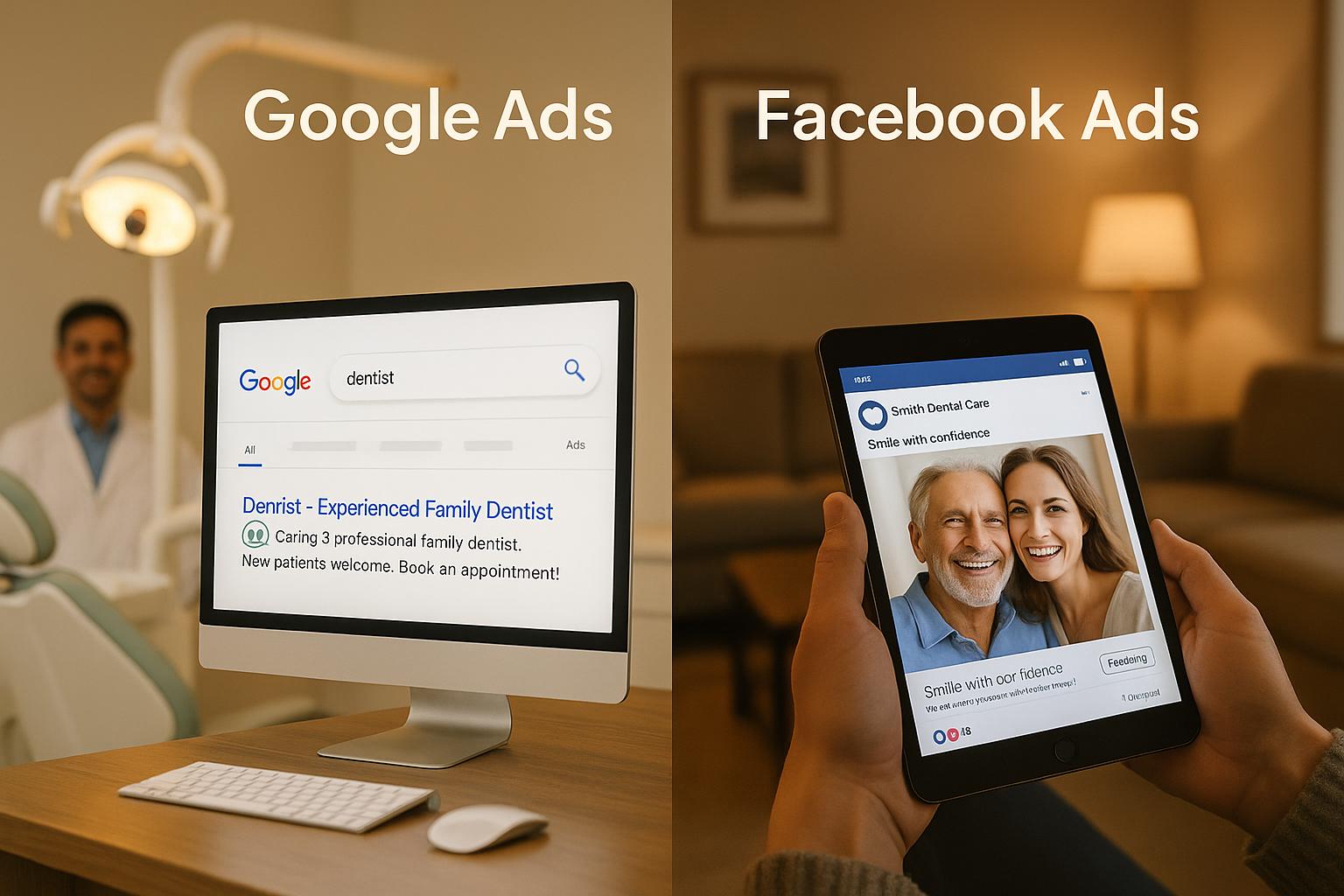
Which platform is better for your dental practice: Google Ads or Facebook Ads? It depends on your goals. Google Ads works best for immediate results, targeting patients actively searching for dental services like "emergency dentist near me." On the other hand, Facebook Ads focuses on building awareness and engaging potential patients who may not yet know they need dental care.
Key Takeaways:
- Google Ads: High-intent targeting, faster conversions, but higher costs per click.
- Facebook Ads: Lower costs, broader reach, ideal for long-term engagement and brand building.
Quick Comparison:
| Feature | Google Ads | Facebook Ads |
|---|---|---|
| Audience Intent | High (search-based) | Low (passive browsing) |
| Cost per Click | $2.69 – $5.56 | $0.70 – $0.77 |
| Conversion Rate | Higher due to search intent | Lower, focused on awareness |
| Cost per Acquisition | $80 – $220 | $50 – $150 |
| Best Use Cases | Immediate bookings, emergency care | Brand awareness, long-term growth |
| Budget Range | $1,500 – $3,000/month | $500 – $1,500/month |
For filling appointments quickly, use Google Ads. For building trust and awareness, opt for Facebook Ads. Combining both platforms can deliver even better results by balancing immediate leads with long-term patient growth.
💰 Google Ads VS. Meta Ads: Why You Should Run BOTH (Not One!)
Google Ads: Reaching Patients Ready to Book
Google Ads is a powerful tool for dental practices looking to connect with patients actively searching for services like "dentist near me" or "emergency dental care." With its pay-per-click model, you only pay when someone clicks on your ad. In 2025, dental campaigns using Google Ads saw an average conversion rate of 9.08%, meaning nearly one in ten clicks turned into a lead. Let’s explore the benefits and challenges of using Google Ads to grow your practice.
Benefits of Google Ads
Targeting Patients with Immediate Needs
Google Ads allows you to reach people searching for high-intent keywords like "Invisalign consultation" or "emergency dentist near me", making it easier to connect with patients ready to book.
Instant Visibility
Unlike organic search, which can take months to rank, Google Ads places your practice at the top of search results immediately. For dental practices, this can generate 50% more conversions than organic search efforts.
Geo-Targeting for Local Reach
With geo-targeting, you can focus your ads on specific areas, such as neighborhoods or zip codes, ensuring you’re reaching patients most likely to visit your practice.
"Google Ads drives highly qualified traffic to your website, increasing the likelihood of converting clicks into booked appointments." – Promodo
Flexible Budgets and Measurable Results
You can start with a small budget and scale up based on performance. Plus, Google Ads provides detailed metrics like cost per lead and conversion rates, making it easier to track and improve your campaigns.
Drawbacks of Google Ads
Higher Costs per Click
Dental-related keywords can be expensive, ranging from $2 to $12 per click, with popular terms costing even more due to competition.
Competitive Market
In busy metropolitan areas, competing with other local practices can be tough. Practices may need monthly budgets between $3,000 and $7,000 to stay competitive.
Ongoing Management
Running successful Google Ads requires consistent effort. This includes keyword research, adjusting bids, testing ad copy, and managing negative keywords to maintain performance and control costs.
Ad Types and Targeting Options
Search Campaigns
These are the backbone of dental advertising. Text-based ads target high-intent searches, such as "dentist near me" or "emergency dental care", ensuring your practice appears when patients need it most.
Local Services Ads
These ads operate on a pay-per-lead model and appear at the very top of search results for local queries. In January 2023, a dental practice using Local Services Ads reported a noticeable boost in visibility and patient inquiries thanks to their prime placement.
Display Ads
Visual ads across Google’s network can help build brand awareness and retarget website visitors who didn’t book an appointment initially.
"Geo-targeting isn’t about throwing more money at ads. It’s about focusing your pay-per-click strategy on the neighborhoods that drive appointments." – Xaña Winans, Digital Advertising Expert
Keyword-Based Targeting
By focusing on specific search terms, practices can connect with patients looking for their services. For example, a dental office in Phoenix increased new patient appointments by 34% in three months by targeting location-specific keywords like "dentist in Phoenix" and "emergency dentist near me".
Ad Extensions
These features add extra details to your ads – like phone numbers, location info, and links to service pages – making it easier for potential patients to get in touch.
With these strategies in place, Google Ads offers dental practices a way to drive patient inquiries and bookings. Next, we’ll compare this approach to Facebook Ads to see which platform might work best for your goals.
Facebook Ads: Building Brand Awareness and Patient Interest
Facebook Ads are a powerful tool for introducing your dental practice to potential patients and sparking interest, even if they aren’t actively searching for dental care. Unlike Google Ads, which focus on immediate search intent, Facebook Ads meet users where they are – scrolling through their feeds. This creates an opportunity to reach people who may not yet realize they need your services. Did you know that over 70% of adults use social media to research local businesses, including healthcare providers? This shift in behavior highlights why Facebook Ads can play a unique role in your marketing strategy.
Benefits of Facebook Ads
Advanced Demographic and Interest-Based Targeting
Facebook offers some of the most precise targeting options available. Want to reach young parents looking for pediatric dental care? Or adults considering cosmetic dentistry? You can tailor your ads based on factors like age, location, interests, and behaviors, ensuring your message lands in front of the right audience.
Affordable Reach with Lower Competition
Compared to Google Ads, Facebook Ads often have a lower cost-per-click, making them a cost-effective way to reach a broad audience. Many dental practices see results with monthly ad budgets ranging between $500 and $1,500.
Showcasing Your Practice Through Visual Content
Facebook’s visual format is ideal for sharing before-and-after photos, patient testimonials, and even virtual office tours. These posts can generate likes, comments, and shares, which help build trust with potential patients. Video content, in particular, is a standout for creating familiarity and credibility.
"Facebook Ads are great for building brand awareness and reaching a broader audience, which can be especially helpful for startup practices or those undergoing a rebrand."
- Xaña Winans, Digital Advertising Expert, Golden Proportions Marketing
Remarketing to Stay Top of Mind
Facebook’s remarketing tools let you re-engage people who have visited your website but haven’t booked an appointment yet. This keeps your practice in their minds as they consider their dental care options.
Drawbacks of Facebook Ads
While Facebook Ads shine in many areas, they come with challenges that dental practices need to manage.
Lower Immediate Conversion Intent
Most Facebook users aren’t actively searching for dental services when they see your ad. This means the platform is better suited for building awareness and nurturing relationships over time rather than driving instant appointments.
The Need for Fresh Content
Ad fatigue is a common issue. If users see the same ad repeatedly, they’ll lose interest. To keep engagement high, you’ll need to regularly update your visuals, videos, and ad copy.
Ad Types and Targeting Options
Video Ads for Building Trust
Videos are a fantastic way to connect with potential patients. Whether it’s an office tour, a patient testimonial, or a quick explanation of a procedure, video ads can tell your story in a dynamic and engaging way. Carousel ads are another great option, allowing you to showcase multiple services in a single post.
"Facebook ads create intent by engaging users in their feed with compelling visuals, offers, and stories."
- Guillaume Heintz, Lead Generation Strategist, Dolead
Custom Audiences for Re-engagement
Using Facebook’s Custom Audiences feature, you can target people who’ve already interacted with your practice – whether they visited your website, engaged with your posts, or are part of your patient list. This approach is perfect for creating campaigns that re-engage potential patients.
Lookalike Audiences for Growth
Facebook can help you find new patients by targeting people who share similar traits with your existing ones. For example, in November 2025, Dr. Flood used Custom and Lookalike Audiences to achieve an impressive 82% case acceptance rate from Facebook leads, boosting her monthly recurring revenue to $24,000.
"When you dial in Facebook targeting for dentists, you don’t just get clicks – you get patients ready to book, accept treatment, and STAY."
- Jordon Comstock, Founder & CEO of BoomCloud™
Targeting Families and Specific Groups
Facebook’s detailed targeting options allow you to reach specific demographics, such as parents for pediatric services or adults interested in cosmetic dentistry. For example, one dental practice launched a family dentistry campaign in August 2025, targeting young parents in their local community. The result? A 30% increase in appointment bookings over just three months.
Facebook Ads are an excellent way to build long-term relationships and strengthen your practice’s presence in the community. While the path from ad view to appointment may take longer compared to Google Ads, the platform’s ability to nurture trust and familiarity makes it a valuable part of any dental marketing strategy. These insights complement the overview of Google Ads, helping you decide which platform best aligns with your goals.
sbb-itb-f6ab3ee
Google Ads vs Facebook Ads: Side-by-Side Analysis
Now that we’ve looked at Google Ads and Facebook Ads individually, let’s compare them directly. Knowing how these platforms differ can help you decide where to focus your advertising dollars and how to shape your campaigns for the best results.
Platform Comparison Chart
When you put Google Ads and Facebook Ads side by side, their differences become much clearer. Each platform has unique strengths, and their effectiveness depends on the goals of your marketing strategy.
| Feature | Google Ads | Facebook Ads |
|---|---|---|
| Audience Intent | High (users actively searching) | Low (users passively browsing) |
| Average Cost per Click | $2.69 – $5.56 | $0.70 – $0.77 |
| Targeting Type | Intent-based (keywords) | Audience-based (demographics, interests) |
| Conversion Rate | Higher due to search intent | Lower, focused on engagement |
| Best Use Cases | Immediate patient bookings, emergency services | Brand awareness, long-term engagement |
| Budget Requirements | $1,500 – $3,000/month for effective campaigns | More economical, flexible budgets |
| Cost per Acquisition | $80 – $220 | $50 – $150 |
Google Ads often come with a higher price tag because of competitive keywords, but they tend to deliver faster results.
"Google Ads are unmatched when it comes to capturing patients in the moment they’re ready to schedule." – Xaña Winans, Digital Advertising Expert, Golden Proportions Marketing
This breakdown offers a clear starting point for aligning your ad strategy with your specific goals.
Matching Platforms to Practice Goals
Using the comparison above, your choice between Google Ads and Facebook Ads should match your practice’s priorities – whether that’s immediate bookings or long-term growth. Each platform shines at different stages of the patient journey, from building awareness to securing appointments.
To Secure Immediate Appointments
If filling appointment slots quickly is your top priority, Google Ads is the way to go. By targeting patients actively searching for dental services, it drives quicker conversions. For example, in February 2025, a dental practice using Google Ads saw a 30% boost in new patient bookings within the first month of launching a focused campaign for emergency dental services.
For Long-Term Brand Building
Facebook Ads are ideal for creating awareness and trust within your local community. One dental clinic that focused on brand awareness through Facebook Ads reported a 50% increase in social media engagement and a 20% rise in website traffic over three months. This gradual growth led to more patient inquiries over time.
"Facebook Ads are best used for awareness, trust-building, and nurturing leads over time – not immediate patient acquisition." – Xaña Winans, Digital Advertising Expert, Golden Proportions Marketing
The Patient Journey Approach
Many smart dental practices are now using both platforms together for a well-rounded strategy. Google Ads attract high-intent patients who are ready to book, while Facebook Ads nurture those who may need more time before scheduling an appointment. Combining these approaches helps you balance immediate results with building a steady pipeline of future patients.
For practices with limited budgets or just starting out, Facebook’s lower cost per click makes it a great tool for building initial awareness. On the other hand, established practices that need consistent patient flow often find Google Ads worth the higher investment due to its strong conversion potential.
Ultimately, your choice depends on your current patient volume, budget, and growth goals. If you’re looking for quick wins, focus on Google Ads. If you’re playing the long game, Facebook Ads can help you build trust and community connections. Measuring success on each platform is key to refining and optimizing your strategy.
Performance Metrics to Monitor
Tracking the right metrics can mean the difference between campaigns that drain your budget and those that bring in new patients. To make the most of your advertising dollars, it’s crucial to define clear KPIs – like scheduled appointments and calls – before launching any campaigns. Let’s break down the key metrics for each platform to help fine-tune your strategy.
Google Ads Performance Indicators
When it comes to Google Ads, dental practices benefit from focusing on metrics that directly impact appointments. Since users are actively searching for dental services, conversion-focused metrics are your best tools.
- Cost per Click (CPC): This is the amount you pay every time someone clicks on your ad. In competitive healthcare markets, CPC typically ranges from $10 to $40.
- Cost per Acquisition (CPA): Often a top priority for dental practices, CPA measures the cost of acquiring a new patient. For general dentistry, this usually falls between $80 and $220, while orthodontic practices might see CPAs above $200.
- Click-Through Rate (CTR): This metric shows how often people click your ad after seeing it. A low CTR could mean your ad copy or keyword targeting needs tweaking.
- Conversion Rate: This tells you the percentage of ad clicks that lead to actions like appointments or calls. On average, Google Ads can deliver $2 in revenue for every $1 spent.
- Return on Ad Spend (ROAS): ROAS gives you a big-picture view of your campaign’s profitability. Pair it with your average patient lifetime value to ensure your ad spend is worthwhile.
To get a full picture of your campaign’s effectiveness, track calls and online bookings using tools like Google Analytics. While Google Ads focuses on immediate search intent, Facebook Ads require a different approach.
Facebook Ads Performance Indicators
Facebook Ads operate in a different space – users aren’t actively searching for dental services, so the focus shifts to engagement, awareness, and nurturing potential leads.
- Cost per Acquisition (CPA): Dental practices generally see CPAs ranging from $50 to $150, making it a cost-effective option for lead generation.
- Engagement Rate: This measures interactions like likes, shares, comments, and video views. A high engagement rate signals that your content is resonating with your audience and building trust.
- Reach and Frequency: These metrics show how many people see your ads and how often. Be cautious of ad fatigue – if the same audience sees your content too often, it might lose its effectiveness. Refresh your creative regularly.
- Cost per Click (CPC): Facebook Ads tend to have a lower CPC, averaging between $1 and $5 per click.
- Conversion Rate: Since Facebook users aren’t actively searching, conversion rates may be lower than on Google Ads. Focus on nurturing leads with follow-up campaigns rather than expecting immediate bookings.
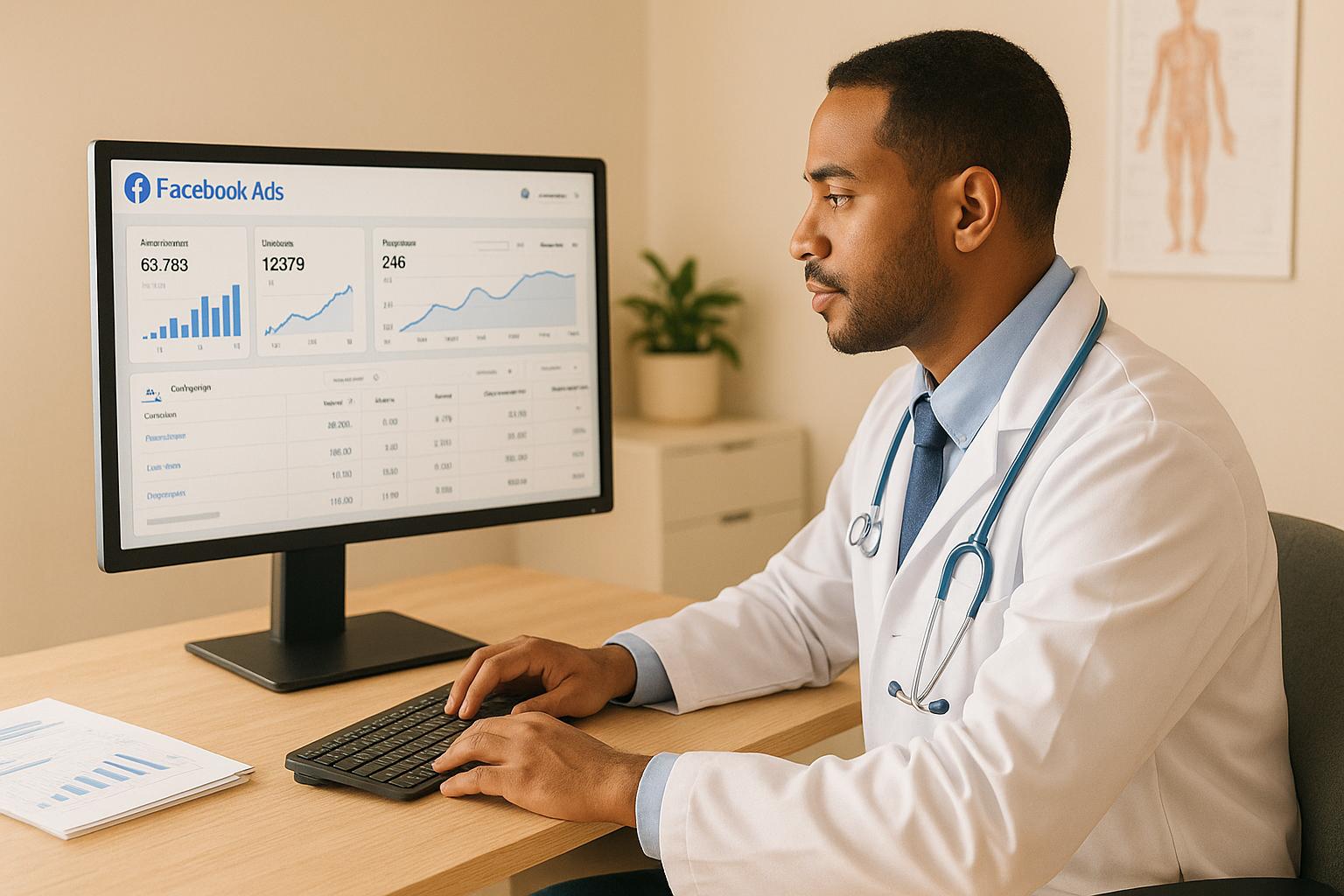
If you’re running video ads, tracking how long viewers watch can provide valuable insights into their interest levels. Tools like Facebook Pixel can also help monitor what actions visitors take on your website after clicking your ads, offering a clearer picture of the patient journey.
Consistent reporting is essential to identify which campaigns are bringing in the best leads. Set up weekly or monthly reviews to spot trends and make necessary adjustments. Keep in mind that Facebook’s tracking capabilities have been impacted by iOS updates, so advanced tracking tools might be worth considering. Regular optimization ensures your campaigns stay effective over time.
Choosing the Right Platform for Your Practice
When deciding on the best ad solution for your dental practice, it’s crucial to weigh your specific needs. For practices focused on immediate bookings, Google Ads is a strong choice. On the other hand, if you’re aiming for long-term growth, Facebook Ads might be the better fit.
Google Ads is perfect for reaching patients with high intent – those actively searching for dental services. This makes it ideal for emergency dental care, cosmetic treatments, or practices in competitive markets. Meanwhile, Facebook Ads shine when it comes to building relationships and educating potential patients. This platform works particularly well for orthodontics, pediatric dentistry, or promoting new services like Invisalign or teeth whitening.
When it comes to budgeting, consider each platform’s strengths. If you’re working with limited funds, Google Ads can deliver higher conversion rates, making every dollar count. For practices with larger budgets, Facebook Ads offers a lower cost per click, which is great for nurturing leads over time.
Patient demographics also play a role. Google Ads may be more effective for targeting older patients who rely on search engines, while Facebook’s visual and social format is a natural fit for connecting with younger families.
For the best results, consider integrating both platforms into a cohesive strategy. Instead of choosing one over the other, analyze your goals, patient demographics, and budget to craft a campaign that works across both. Smaller practices might benefit from Basic Plans, which focus on optimizing a single platform. Larger practices, however, can explore Advanced and Premium Plans for a more comprehensive, multi-platform approach.
FAQs
What’s the best way for dental practices to use Google Ads and Facebook Ads to attract new patients and build brand awareness?
To maximize your advertising efforts, combining Google Ads and Facebook Ads can be a game-changer. Google Ads works best for reaching patients who are actively searching for dental services like teeth whitening or emergency care. These are high-intent leads – people ready to take action.
Meanwhile, Facebook Ads shine when it comes to boosting brand awareness and connecting with potential patients who might not yet be actively searching for a dentist. With Facebook’s advanced targeting, you can zero in on specific groups, such as families or individuals in your local community, and engage them with tailored content and special offers. By leveraging both platforms, you can attract new patients while also building trust and loyalty over time.
How can a dental practice optimize Google Ads to attract patients needing emergency dental care?
To bring in patients searching for emergency dental care, focus on high-intent keywords such as "emergency dentist near me" or "urgent dental care." Pair this with location targeting to ensure your ads reach people in your local area. Adding call extensions is also a smart move, making it easy for potential patients to contact your office directly.
If your practice offers after-hours services, consider running 24/7 ad campaigns to highlight that availability. Be sure your ad copy emphasizes key points like immediate availability, quick service, and pain relief. Keep an eye on important metrics like click-through rates (CTR) and conversion rates to fine-tune your campaigns and get the best possible results.
How can dental practices keep their Facebook Ads fresh and engaging to prevent ad fatigue?
To keep Facebook Ads fresh and engaging, dental practices should frequently update their visuals, messaging, and offers. Switching up images, videos, and headlines helps maintain interest while reaching a variety of patient demographics.
Trying out different ad formats, like carousel ads or video ads, can also add variety and keep your content dynamic. Pay close attention to performance metrics such as click-through rates (CTR) and engagement levels. If these numbers start to dip, it’s a clear sign your ads may need a refresh. Regular updates ensure your ads stay relevant and continue to capture the attention of potential patients.