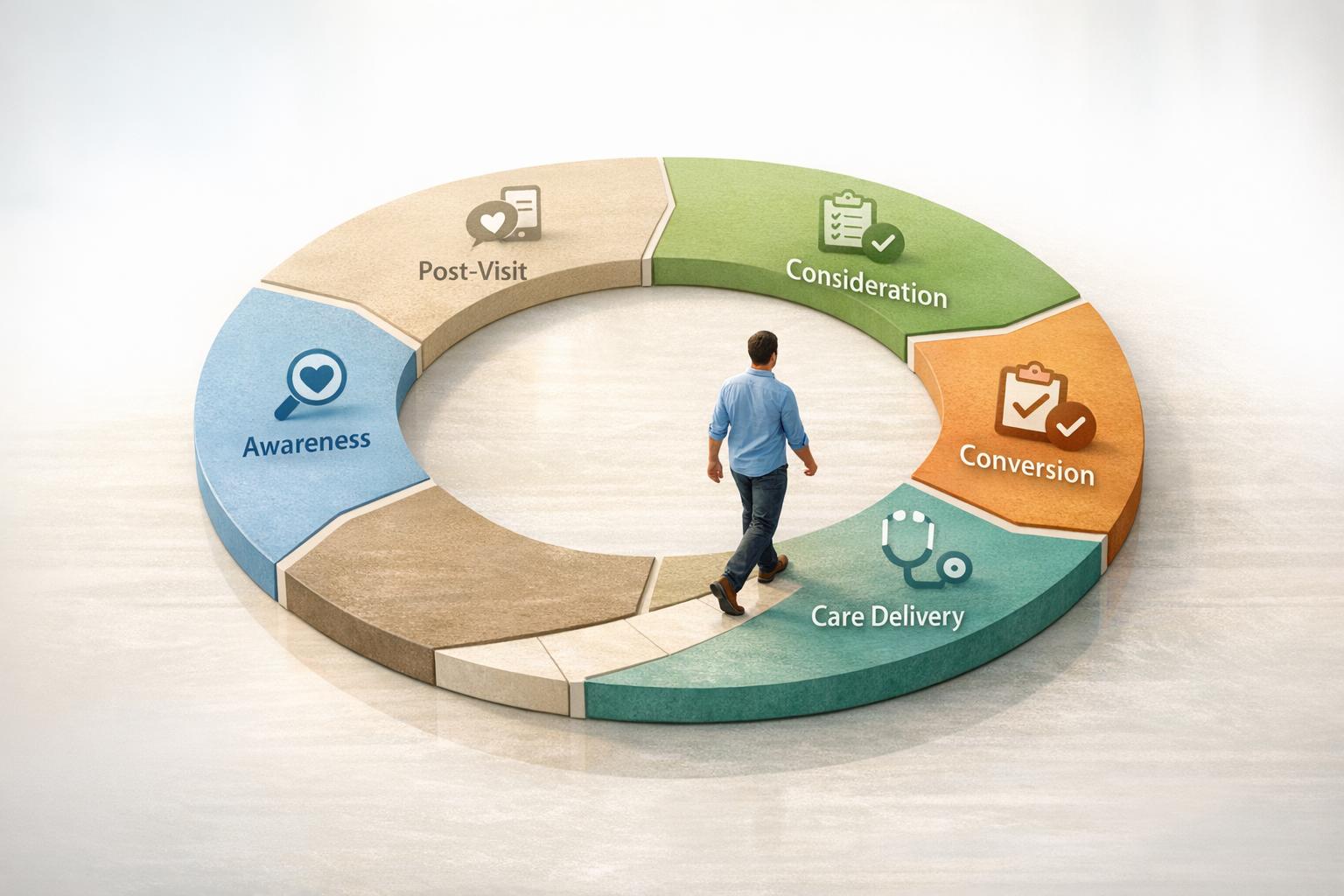
The digital patient journey covers every online interaction patients have with healthcare providers, from initial searches to post-treatment follow-ups. Tracking key metrics at each stage helps identify pain points, improve processes, and enhance patient experiences. Here’s what you need to know:
- Stages of the Journey: Awareness, Consideration, Conversion, Care Delivery, and Post-Visit.
- Key Metric Categories:
- Acquisition: How patients find your practice (e.g., search engines, ads).
- Experience: Usability of tools like booking systems.
- Engagement: Interactions with content, portals, and tools.
- Operational Efficiency: System performance (e.g., scheduling speed).
- Financial Performance: ROI and conversion rates.
Highlights:
- Awareness Metrics: Track impressions, click-through rates (CTR), and cost-per-click (CPC) to measure visibility.
- Consideration Metrics: Focus on bounce rates, page engagement, and reviews to build trust.
- Conversion Metrics: Monitor appointment conversion rates and reduce time-to-appointment for better results.
- Care Delivery Metrics: Measure telehealth usage, portal activity, and patient satisfaction scores.
- Post-Visit Metrics: Retention rates, follow-up completion, and lifetime value (LTV) reflect loyalty and long-term success.
By using tools like Google Analytics, patient portals, and CRM systems, you can integrate data and optimize the patient journey. AI-driven models further refine strategies by identifying the most effective campaigns and tools. Tracking these metrics ensures better patient care while improving practice growth.
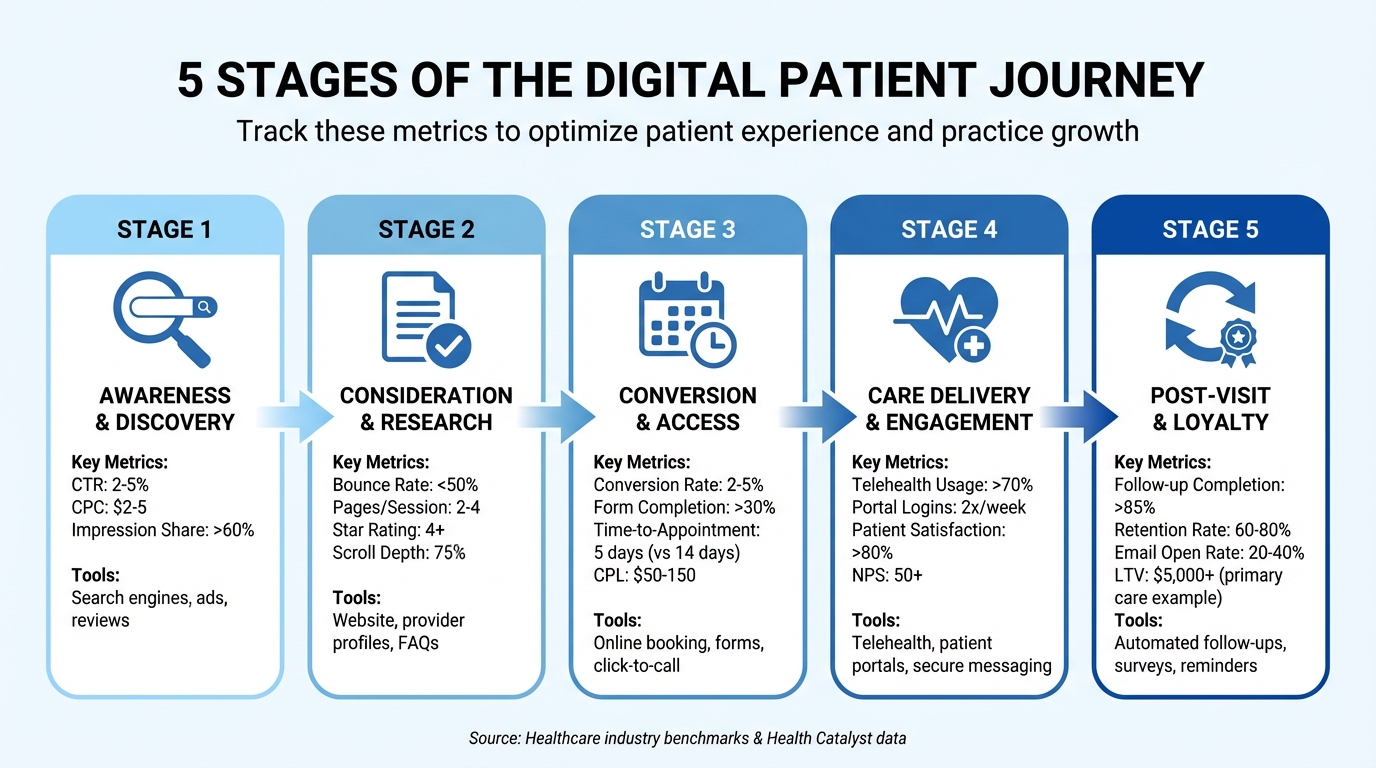
5 Stages of Digital Patient Journey with Key Metrics
Digital Patient Journey Stages
The 5 Major Journey Stages
The digital patient journey unfolds in five key stages, each with distinct goals and priorities. It begins with Awareness and Discovery, where individuals first notice a health concern and start searching online – whether through Google, social media, or ads – to find healthcare providers. At this stage, the focus is on increasing visibility among the right audience: people actively seeking services like yours.
Next comes Consideration and Research, where potential patients dig deeper. They read reviews, check insurance compatibility, and visit provider websites. Here, your goal shifts to building trust by addressing their questions and easing any uncertainties. Then, there’s Conversion and Access to Care, the pivotal moment when a patient decides to book an appointment. Whether they use an online scheduling tool, a web form, or call directly, the priority is to ensure the process is quick and hassle-free, turning interest into action.
Once care begins, the focus moves to Care Delivery and Treatment Engagement. This stage involves everything from in-person visits and telehealth sessions to patient portal use, secure messaging, and remote monitoring. The aim is to keep patients engaged and on track with their treatment plans. Finally, Post-Visit Follow-Up and Loyalty covers all interactions after the appointment, such as follow-up instructions via email or text, satisfaction surveys, medication reminders, and review requests. This stage is about building lasting relationships and encouraging patients to return for ongoing care. Together, these stages outline the digital touchpoints that enhance patient engagement.
Digital Touchpoints and Tools
Each stage of the patient journey relies on specific digital tools to improve interactions. During Awareness, patients turn to search engines, online ads, and review platforms. Agencies like Medical PPC Agency manage these channels with targeted campaigns, using keyword strategies and geo-specific ads to attract high-intent traffic while keeping costs down.
In the Consideration phase, your website becomes the central hub. Elements like landing pages, provider profiles, FAQ sections, insurance verification tools, and chatbots play a crucial role. Optimizing these pages with clear calls-to-action, trust-building elements, and U.S.-specific insurance details can make all the difference in whether patients choose to proceed.
For Conversion, tools like online booking widgets, appointment request forms, and click-to-call buttons are essential. Practices that simplify these processes – offering real-time scheduling and completing bookings in under five minutes – experience significantly higher success rates.
During Care Delivery, tools such as telehealth platforms, patient portals for accessing lab results and visit summaries, secure messaging systems, and medication reminder apps are vital. These tools need to be HIPAA-compliant and user-friendly, as overly complex systems can lead to patient disengagement.
Finally, the Post-Visit stage leverages automated SMS and email campaigns, satisfaction surveys, and review request systems. Medical PPC Agency’s AI-powered patient acquisition tools can automate follow-ups, segment patients for recall appointments or preventive care reminders, and even aid in chronic disease management. These efforts not only strengthen patient relationships but also allow practices to track revenue generated from these initiatives in real dollars.
Metrics to Track at Each Stage
Awareness and Discovery Metrics
At the top of the funnel, focus on metrics like impressions, CTR (click-through rate), CPC (cost per click), and impression share to measure how visible your practice is and how well ads are performing. A good CTR falls between 2–5%, while CPC averages $2–5, though competitive specialties like orthopedics may see higher costs. Aim for an impression share above 60% to ensure your ads are reaching a significant portion of your audience. If your CTR drops below 2%, it’s time to revisit your ad copy or targeting strategy. Additionally, track website sessions by source – whether from organic search, paid ads, or social media – to identify which channels are driving traffic. Breaking this data down by service line can reveal which specialties are performing best, setting the stage for further analysis as patients interact with your site.
Consideration and Research Metrics
Once potential patients arrive on your site, engagement metrics help you understand how well your content meets their needs. A bounce rate under 50% is ideal; anything higher could indicate that landing pages aren’t relevant or user-friendly. Look at pages per session (target 2–4) and scroll depth (aim for 60% of visitors scrolling at least 75% of the page) to gauge how deeply users engage with your content. Reviews also matter – strive for an average star rating of 4+ and aim to collect at least 10 reviews per provider monthly. High exit rates could signal the need to refine CTAs, improve FAQ sections, or simplify tools like insurance verification. These insights help you fine-tune the patient experience and prepare for the next step: converting interest into action.
Conversion and Access to Care Metrics
This stage is all about turning interest into appointments. A conversion rate of 2–5% and a form completion rate above 30% are solid benchmarks. Reducing the time-to-appointment from 14 days to 5 days can significantly boost conversions – by as much as 20%. Keep an eye on your cost per lead (CPL), which typically ranges from $50–150 in healthcare, although this varies by specialty and location. Track how patients schedule appointments – whether through digital self-scheduling or by phone – and optimize your online booking tools to make the process as quick as possible, ideally under five minutes. Tools like Medical PPC Agency’s AI systems can help identify which campaigns deliver the most cost-effective leads and the highest appointment completion rates, allowing you to allocate your budget more effectively.
Care Delivery and Treatment Engagement Metrics
During active care, digital tools can provide valuable insights into patient engagement. For example, aim for telehealth utilization rates of over 70% among patients offered virtual visits. Monitor patient portal activity, including login frequency (targeting at least twice per week for active patients) and secure messaging volume (5–10 messages per patient monthly). According to Health Catalyst, well-designed engagement programs with timely, personalized outreach can achieve over 75% patient engagement rates. Also, measure patient satisfaction using tools like CSAT (target 80% or higher) and Net Promoter Score (NPS) (aim for 50+). If portal usage is low, investigate whether the platform is too complicated or if patients need better onboarding.
Post-Visit Follow-Up and Loyalty Metrics
The final stage focuses on building loyalty and ensuring long-term relationships. Aim for a follow-up completion rate above 85% and a patient retention rate of 60–80% annually. Track email and SMS engagement, with open rates of 20–40% and click rates of 3–5%. Calculate lifetime value (LTV) by multiplying the average revenue per patient by the number of years they stay with your practice. For example, a primary care practice might see an LTV of $5,000 per patient over several years. Automated follow-up campaigns can boost retention by 15% – monitor open and response rates to refine your messaging. Use these insights to identify patients due for preventive care or chronic disease management, and track the revenue generated from these recall efforts. These metrics complete the picture of a well-rounded patient journey, helping your practice grow while improving patient outcomes.
Building a Unified Metrics Framework
How to Organize Your Metrics
To effectively track performance, create a journey-stage matrix that aligns your five key stages – Awareness, Consideration, Conversion/Access, Care Delivery/Engagement, and Post-Visit/Loyalty – with measurable indicators. For each stage, define 3–5 core KPIs and 5–10 supporting diagnostic metrics to help explain any shifts in performance. For instance, alongside tracking your online appointment conversion rate, consider monitoring related factors like form error rates, mobile versus desktop conversions, or page load times. Use a shared data dictionary to standardize key terms and introduce color-coded scorecards to provide leadership with quick, actionable insights. This structured framework ensures you can integrate diverse data sources and gain a clearer picture of patient engagement.
Tools and Data Sources to Use
Bringing all your data together is crucial. Combine insights from platforms like Google Analytics 4, ad networks, call tracking systems, patient portals, telehealth platforms, and CRM/EMR systems into a single, unified view. Here’s how these tools contribute:
- Google Analytics 4: Tracks web and app interactions, including sessions, funnel drop-offs, device usage, and geographic trends.
- Ad Platforms: Metrics from Google Ads, Facebook Ads, and Microsoft Advertising provide details like impressions, click-through rates (CTR), cost-per-click (CPC in USD), and campaign-specific conversions.
- Call Tracking Solutions: Essential for attributing phone appointment bookings to digital campaigns, especially as many U.S. patients still prefer scheduling via phone.
- Patient Portals and Telehealth Platforms: Offer engagement data, such as logins, secure messages, prescription refills, and telehealth attendance rates.
- CRM/EMR Systems: Link engagement data to clinical and financial outcomes, including completed visits, no-show rates, payer mix, and revenue per patient episode.
To ensure all this data works together, connect these systems through a HIPAA-compliant data warehouse or customer data platform. Using pseudonymous or de-identified datasets, this setup allows you to trace the patient journey – from the first online interaction to clinical outcomes – without compromising Protected Health Information (PHI).
AI-Driven Attribution and Analysis
AI-driven multi-touch attribution models, like those used by Medical PPC Agency, analyze how each platform contributes to leads and appointments. These models aggregate campaign data and correlate it with de-identified patient journey insights, making it easier to allocate budgets where they’ll have the most impact. By identifying campaigns that generate cost-effective leads and high appointment completion rates, AI tools help fine-tune your marketing strategy.
Real-time dashboards provide an ongoing view of marketing performance and patient acquisition trends. Additionally, detailed patient analytics map communication protocols across the patient journey, helping to improve both conversion rates and satisfaction. This data-driven approach transforms care from isolated visits to more seamless, adaptive experiences. Health systems leveraging optimized digital programs have reported engagement rates surpassing 75%.
sbb-itb-f6ab3ee
Ep 65 – Navigating the Healthcare Landscape: Mapping the Patient Journey
Conclusion: Using Metrics to Improve Patient Outcomes
Keeping track of metrics at every step of the digital patient journey – from initial awareness to ongoing loyalty – provides valuable insights into what’s working and where improvements are needed. For example, spotting high drop-off rates on scheduling pages can lead to redesigning interfaces to make them more user-friendly, addressing a common pain point.
When data is used effectively, it allows for more personalized patient interactions, smoother digital experiences, and higher success rates for key tasks. Some health systems have seen patient engagement rates soar beyond 75% by adopting advanced digital tools, which directly contributes to better health outcomes and enhances quality of life. These benefits ripple outward, leading to stronger patient retention, more frequent return visits, and better adherence to treatment plans. On top of that, these changes often bring cost savings and revenue growth.
Higher engagement doesn’t just improve patient care – it also makes resource management more efficient and strengthens financial performance. For instance, refining FAQs and navigation tools can reduce support costs, while loyalty and engagement directly tie into revenue growth. Medical PPC Agency’s AI-driven attribution models are another game-changer, helping practices focus their budgets on campaigns that deliver cost-efficient leads and drive appointment completions. By weaving these insights into a unified metrics system, healthcare providers can fine-tune their digital strategies to simultaneously enhance patient care and grow their practices.
FAQs
What key metrics should healthcare providers monitor during the digital patient journey?
To gauge success along the digital patient journey, focus on tracking key metrics like patient inquiries, appointment booking rates, and website engagement (such as bounce rate and average time spent on the site). It’s also important to keep an eye on lead quality, cost per acquisition (CPA), and return on ad spend (ROAS) to assess how effectively your marketing efforts are performing. On top of that, monitoring patient retention rates offers valuable insights into long-term satisfaction and loyalty.
By analyzing these metrics, healthcare providers can better understand patient behavior, fine-tune their marketing strategies, and enhance both patient acquisition and engagement.
How does AI improve the digital patient journey and healthcare outcomes?
AI plays a pivotal role in transforming the digital patient experience by offering tailored and forward-looking insights throughout every phase – starting from initial awareness to ongoing care. By examining patient data, AI empowers healthcare providers to predict needs, customize interactions, and simplify workflows.
The results? Increased patient engagement, enhanced satisfaction, and improved treatment outcomes. On top of that, AI supports timely interventions and smarter resource management, making sure patients get the care they need exactly when they need it.
What are the best tools to optimize each stage of the digital patient journey?
To make the most of every stage in the digital patient journey, healthcare providers can tap into various tools designed for specific purposes. Data analytics platforms deliver real-time insights into how patients interact and engage, helping providers make informed decisions. Tools like Google Ads and Microsoft Advertising come in handy for PPC and SEO campaigns, drawing in new patients through targeted strategies. Meanwhile, social media advertising platforms – think Facebook Ads and YouTube Ads – boost visibility and foster better engagement.
When it comes to maintaining strong patient relationships, patient relationship management (PRM) systems are a game-changer. They simplify communication and follow-up processes, keeping everything organized. On top of that, AI-powered patient acquisition systems can automate and fine-tune marketing efforts, ensuring practices connect with the right patients at the perfect moment.