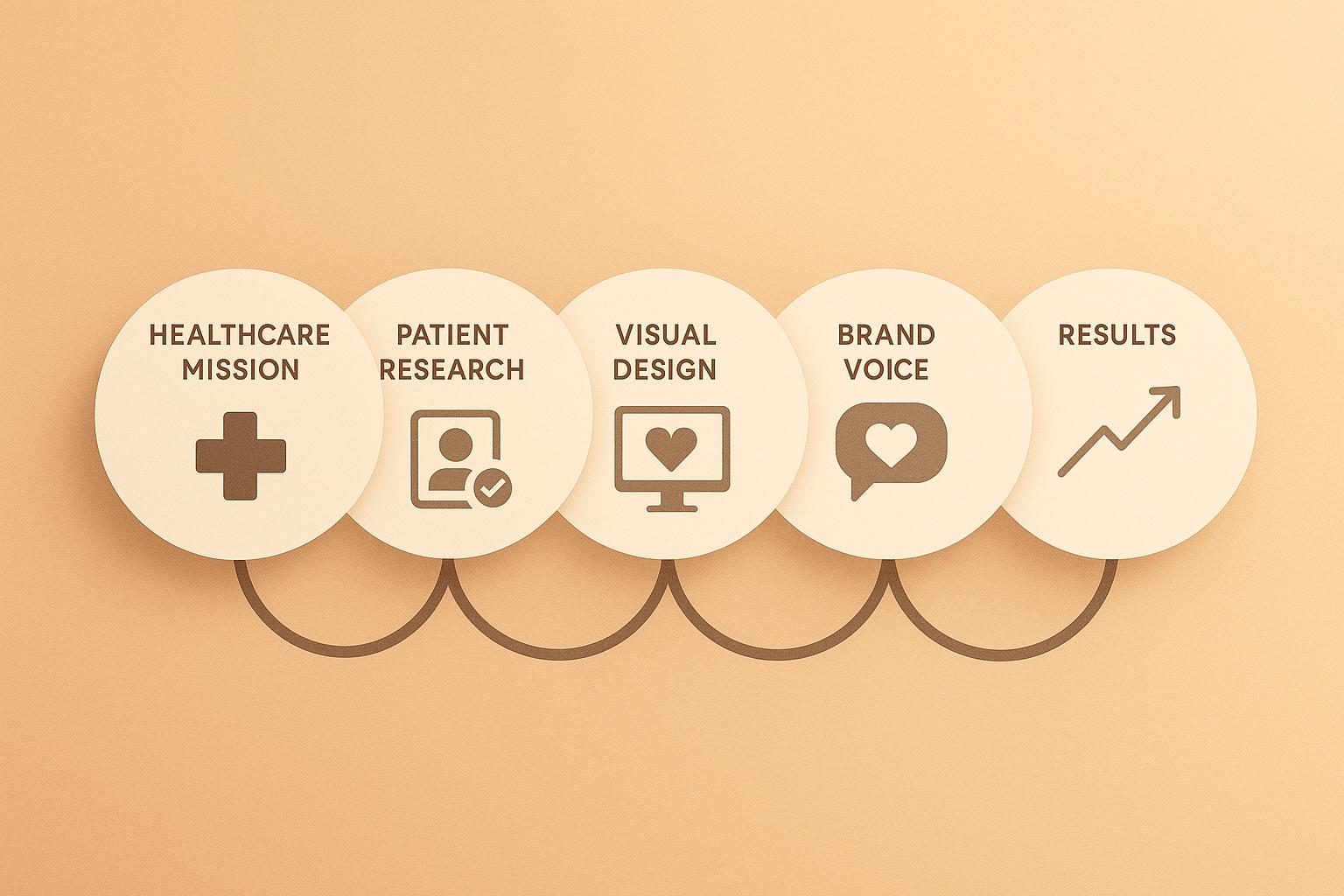
Healthcare branding is about creating a consistent and trustworthy image that resonates with patients. A strong brand identity can help your practice stand out, improve patient trust, and increase retention. Here’s how to build one:
- Define Your Mission, Vision, and Core Values
Clarify your purpose, long-term goals, and guiding principles. Involve your team in workshops to align everyone and document these in a brand platform. - Research Your Patients, Market, and Positioning
Understand patient demographics, preferences, and frustrations. Analyze competitors to identify gaps and craft a unique value proposition that highlights what sets you apart. - Design Your Visual Identity
Create a recognizable logo, color palette, and typography that reflect professionalism and trust. Use a style guide to ensure consistency across all materials. - Establish Your Brand Voice and Messaging
Develop a clear, empathetic tone and consistent messaging pillars that communicate your values and services effectively across all platforms. - Launch Your Brand and Track Results
Update all materials, train your staff, and monitor metrics like website traffic and patient satisfaction to measure success and refine your strategy.
A strong brand identity not only attracts patients but also builds loyalty and enhances your practice’s reputation. By aligning your visuals, messaging, and patient experience, you can create a lasting impact in a competitive market.
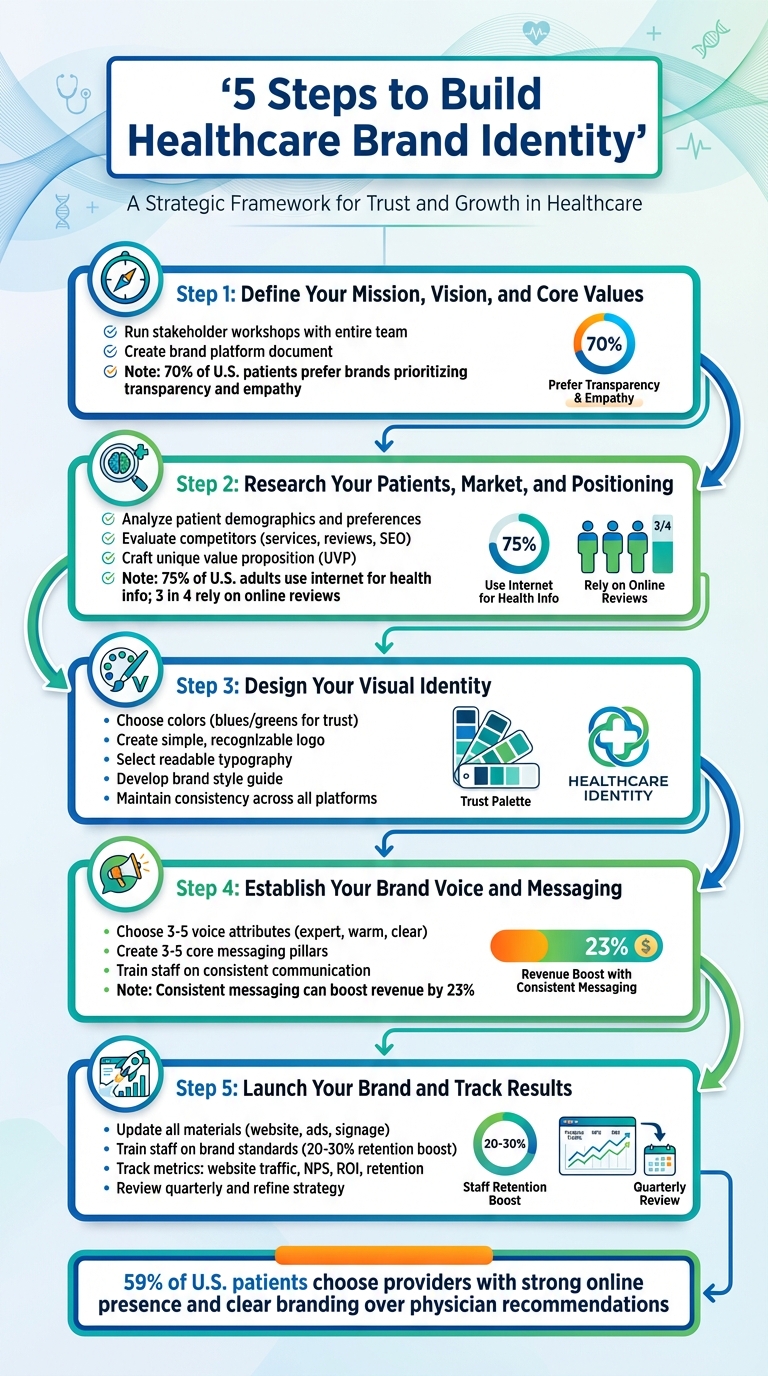
5 Steps to Build a Healthcare Brand Identity
4 Steps On How To Brand Your Healthcare Business
Step 1: Define Your Mission, Vision, and Core Values
Your mission, vision, and core values are the backbone of your branding strategy. They clarify why your practice exists, where it’s headed, and the principles that guide every patient interaction. The mission explains your purpose and the benefits you provide to patients. The vision outlines your long-term goals. Core values establish the standards for how your team interacts with patients, from the first phone call to follow-up care.
These elements influence everything – whether it’s the colors you choose for your logo (blue often conveys trust and stability in healthcare) or how your staff greets patients. For instance, Cleveland Clinic’s mission, “To care for the sick; to care for those who care for the sick,” ensures patient care is central to every decision they make. Similarly, Mayo Clinic’s core value, “The needs of the patient come first,” is reflected throughout their messaging and services.
Healthcare organizations with well-defined core values often see stronger patient trust and better team alignment. In fact, about 70% of patients in the U.S. prefer brands that prioritize transparency and empathy – two qualities that resonate deeply in the healthcare industry.
Run Stakeholder Workshops
To turn these foundational ideas into actionable practices, involve your entire team in the process. Bring together staff from all levels – from front desk personnel to physicians – for collaborative workshops. These sessions should explore questions like, “What does our organization stand for?” and “Why do we offer the services we do?”. Use exercises like brainstorming and value-ranking activities, where participants vote on their top values, such as integrity, innovation, or patient-centered care. Anonymous surveys can also encourage honest feedback.
The outcome of these workshops should be tangible, such as a draft mission statement and a shortlist of three to five core values. The key is to include diverse perspectives, ensuring the entire team feels invested in the process and aligned with the results.
Create a Brand Platform Document
After defining your mission, vision, and values, compile them into a brand platform document. This document acts as a reference point for your organization, including your mission statement, vision, core values, unique value proposition, tagline, and elevator pitch. It serves as a guide for everything from website content to staff training materials and helps ensure consistency in future efforts, like visual branding and messaging.
Refine this document through additional input sessions before making it official. The goal is to create a resource that’s practical and easy to use, keeping your team aligned when making decisions about marketing, hiring, or patient communication.
Match U.S. Patient Expectations
American patients place a high value on transparency, autonomy, and empathy in their healthcare experiences. Incorporate these qualities into your core values by focusing on clear pricing, shared decision-making, and inclusive care delivery. Use tools like patient surveys and focus groups to confirm that your values resonate with your audience.
For example, if your practice serves a diverse population, consider making cultural competence a core value. If you operate in a competitive urban area, emphasize transparency in costs and outcomes. Aligning your mission, vision, and values with patient expectations lays the groundwork for the branding steps that follow, including visual design and messaging.
Step 2: Research Your Patients, Market, and Positioning
Before diving into logos or catchy taglines, it’s crucial to understand your audience and what sets you apart. Research lays the foundation for creating a brand that truly resonates with patients. This involves gathering insights on three key areas: your patients (who they are and what matters to them), your local market (demand and insurance trends), and your competitors (their offerings and how they present themselves).
Skipping this step can lead to missed opportunities. Many providers assume they know their audience, but research often uncovers surprising patient priorities and market gaps. For instance, nearly 75% of U.S. adults turn to the internet for health information, and about 3 in 4 patients rely on online reviews when choosing a doctor. A strong, data-driven strategy is essential for effective positioning.
Understand Patient Demographics and Preferences
Start with the numbers. Use your medical records and management systems to analyze your patient base: their age groups, gender, ZIP codes, insurance types (Medicare, Medicaid, commercial, or self-pay), visit frequency, and common diagnoses. Complement this with public data from sources like the U.S. Census Bureau or state health departments to identify trends in income, chronic diseases, and insurance coverage. For example, by 2025, over 65 million Americans will be aged 65 or older, making up 18% of the population. If your area has a large senior population, your branding should reflect services that cater to their needs.
While demographics tell you who your patients are, psychographics reveal what they care about. Use surveys, focus groups, and online review analysis to dig into their preferences and frustrations. Ask open-ended questions like, “What’s been your biggest frustration with healthcare?” or “What would make a visit ideal for you?” Research shows that 70% of U.S. adults now use health apps, which suggests that many patients value convenience and technology. If your audience includes busy parents who dislike long waits, consider emphasizing same-day appointments or extended hours in your messaging.
From this research, create 2 to 5 patient personas. These could include profiles like “commercially insured suburban parents,” “Medicare seniors with chronic conditions,” or “self-pay young adults seeking urgent care.” Each persona should outline their goals, challenges, and preferred ways to communicate.
Once you’ve mapped out your patient base, shift your focus to your competitors.
Evaluate Your Competitors
Take a close look at what other providers in your area are doing. Identify the top practices in your specialty within a 10- to 25-mile radius and review their services, hours, locations, accepted insurance, and affiliations. Study their websites, Google Business Profiles, social media, and advertising to see what they’re highlighting. Are they promoting “board-certified specialists,” “multilingual staff,” or “same-day care”? Look for recurring themes in their messaging.
Online reviews on platforms like Google, Yelp, and Healthgrades can also provide valuable insights. Pay attention to what patients praise or criticize – common feedback might include issues like long wait times, confusing billing, or excellent bedside manner. These reviews can point to unmet needs that your practice could address. For example, if competitors are frequently criticized for long waits, you could position your practice as offering faster access and valuing patients’ time.
Additionally, analyze your competitors’ SEO and ad strategies using tools like SEMrush or Ahrefs. If local practices are all targeting generic keywords like “best cardiologist NYC” but ignoring terms like “telehealth” or “extended hours,” that’s a chance for you to stand out.
Craft Your Unique Value Proposition (UVP)
Combine insights about your patients and competitors to create a compelling value statement. Your UVP should clearly explain who you serve, the problem you solve, how you’re different, and why patients should trust you. Focus on 2 to 3 differentiators backed by evidence – such as better access, advanced technology, or specialized expertise – that matter to your target audience.
Here’s a simple formula: For [target patient] who [need], [practice name] is [category] that [benefit] because [evidence].
For example: “For busy parents in Chicago seeking pediatric care, ABC Clinic offers same-day appointments and holistic wellness programs, unlike chain clinics with long waits – backed by a 4.8-star rating from over 1,000 local reviews.” Avoid vague claims like “quality care” or “compassionate service” – these are overused and don’t set you apart. Instead, focus on aspects that patients can see and experience.
Before rolling out your UVP, test it. Use A/B testing on landing pages or digital ads to see which points resonate most – for example, “same-day access” versus “bilingual care” versus “specialized chronic disease programs.” Track metrics like click-through rates, cost per lead, and appointment bookings. Agencies like Medical PPC Agency (https://medicalppcagency.com) can help fine-tune these tests using platforms like Google Ads and Facebook Ads to quickly identify what works best for your audience. Once validated, use your UVP consistently across your website, Google Business Profile, PPC ads, clinic signage, and even staff scripts to ensure a unified message.
Step 3: Design Your Visual Identity
After understanding your patients and market position, the next step is to create a visual system that patients instantly recognize. Your visual identity – logo, colors, fonts, and imagery – often forms the first impression of your practice. Whether it’s a Google Ad, your website, or the clinic itself, these elements must project trust, professionalism, and cleanliness – qualities that are non-negotiable in U.S. healthcare. A well-crafted visual identity sets the tone for every interaction with your patients.
Choose Design Elements That Resonate in Healthcare
Colors play a powerful role in shaping perceptions. Blues and greens are ideal for healthcare settings as they communicate stability, safety, and calm. Blue conveys trust and confidence in medical expertise, while green suggests health and cleanliness. To make key elements like "Book Appointment" buttons stand out, pair these with a bright accent color such as orange or teal. Avoid aggressive shades like neon colors or bold reds, which can feel unsettling or untrustworthy in a medical context.
Your logo should be simple and effective at any size, whether it’s on a mobile screen or a prescription pad. Stick to clean, modern designs that are easy to recognize. For typography, opt for one or two highly readable fonts. Sans-serif or humanist serif fonts work well for both digital and printed materials. Establish a clear hierarchy for headings, subheadings, and body text, ensuring strong contrast between text and background for accessibility.
When it comes to imagery, authenticity is key. Use high-quality photos featuring real patients and clinicians that reflect the diversity of your local community. Showcase genuine interactions between providers and patients, along with welcoming, modern facilities. Steer clear of overused stock images, like the generic "doctor with clipboard" in a sterile, white background. Patients respond better to visuals that feel relatable and human. These choices will form the foundation of your style guide.
Develop a Brand Style Guide
Once your design elements are finalized, compile them into a brand style guide. This guide ensures consistency across all materials. Include detailed instructions on how to use your logo (primary and secondary versions, minimum size, spacing rules, and misuse examples), color system (with hex, RGB, and CMYK values), typography (font names, sizes, weights, and spacing), and imagery (approved subjects, composition, and diversity guidelines).
The guide should also cover key applications like digital ads, printed materials, and clinic signage. By documenting these standards, you ensure that every touchpoint – from Facebook ads to waiting room posters – feels unmistakably like your practice. Many organizations create a downloadable PDF or an online portal for staff and external partners, such as agencies like Medical PPC Agency, to reference when creating new materials.
Before finalizing your guide, test your visuals in real-world scenarios. Can your logo be read from across a waiting room? Does your color palette print clearly on an office printer? These practical checks can save you from costly adjustments down the line.
Maintain Visual Consistency Across Digital Campaigns
Consistency is vital for building trust and recognition. Use the same logo, colors, fonts, and imagery style across all platforms. For Google Ads, especially Display and Performance Max campaigns, create banner templates featuring your brand colors and a simplified logo. Ensure text is easy to read on mobile devices, and use your accent color for call-to-action buttons. On social platforms like Facebook and Instagram, where square and vertical formats dominate, stick to your brand colors and imagery style. Feature human-focused photos, such as a provider greeting a patient, while keeping text overlays minimal.
Inconsistent visuals – like mismatched colors or off-brand fonts – can confuse patients and erode trust. Worse, they may perceive inconsistent ads as scams, which can hurt your conversion rates. Studies show that maintaining a consistent brand identity across platforms improves recognition, professionalism, and trust – key factors influencing patient choice in a competitive market. Agencies like Medical PPC Agency can help you stay on track by creating ad creatives that align with your style guide while optimizing for performance on platforms like Google, Facebook, and YouTube.
Don’t overlook accessibility. Ensure your designs meet WCAG guidelines by providing sufficient color contrast for visually impaired users, using large, high-contrast fonts for older adults, and avoiding color combinations that are challenging for color-blind individuals. Not only does this reduce legal risks, but it also improves user experience and increases conversions by making your content accessible to more patients. Include these accessibility standards in your brand style guide so that all creatives – whether developed in-house or by an agency – adhere to the same rules. With your visual identity clearly defined, the next step is to apply these elements consistently across all campaigns.
sbb-itb-f6ab3ee
Step 4: Establish Your Brand Voice and Messaging
With your visual identity set, the next step is to define how your practice communicates with patients. Your brand voice is the personality that comes across in every interaction, from your website content to appointment reminders and digital ads. In healthcare, this voice should strike a balance between clinical expertise and genuine empathy, as many patients feel anxious when seeking care. A consistent voice not only builds trust but also helps your practice stand out in a competitive market. Research highlights that most U.S. patients look up providers online before making a choice. This step connects your visual identity with the way patients experience your brand through language.
Choose Your Brand Voice
Start by selecting 3–5 key attributes for your voice – examples include "expert", "warm", "clear language", and "encouraging." This type of voice combines medical authority with reassurance, such as: "We’re here to guide you every step of the way." A tone of approachable authority, similar to that used by organizations like the Mayo Clinic, inspires confidence while remaining relatable. To ensure consistency, document your voice with clear guidelines and examples so that everyone on your team communicates in the same tone. Avoid medical jargon to make your messaging more accessible to a broad audience.
Create Core Messaging Pillars
Develop 3–5 messaging pillars that reflect your mission, values, and what sets your practice apart. For example, these could include themes like "Compassionate Quality Care", "Advanced Medical Technology", "24/7 Virtual Access", or "Community Trust." Each pillar should be supported by specific examples, such as certifications, patient outcomes, or unique service offerings. For instance, if one of your pillars is "Seamless Accessibility", you might highlight features like same-day appointments, telehealth options, or bilingual staff. Translate medical expertise into patient-centered benefits – phrases like "board-certified cardiologists" can become "specialists dedicated to keeping your heart healthy so you can enjoy more time with your family." These pillars will shape everything from taglines to ad copy, ensuring your messaging is both memorable and distinct. Consistency in these themes reinforces patient trust, which is essential for long-term loyalty.
Use Consistent Messaging Across All Touchpoints
Consistency across all communication channels strengthens brand recognition and ensures your voice is instantly recognizable. Apply your brand voice and messaging pillars to your website, emails, patient portals, social media, and marketing campaigns. For example, Cleveland Clinic’s "Patients First" message is a great example of how consistent messaging fosters strong patient loyalty. Customize templates for different platforms: emails should have reassuring subject lines and clear next steps, websites should feature headings and calls-to-action aligned with your pillars, and digital ads should deliver concise, benefit-focused messages that stay true to your voice. Professional agencies can help craft platform-specific ad content if needed.
To maintain this consistency, train your staff through workshops and provide standardized templates for phone scripts, appointment reminders, and online responses. Regularly audit your materials to catch and update any outdated or off-brand content. This cohesive approach not only helps patients immediately recognize your practice’s values but can also boost revenue by as much as 23%. By presenting a unified brand across all platforms, you lay the foundation for lasting patient loyalty and growth.
Step 5: Launch Your Brand and Track Results
Rolling out your brand involves more than just a fresh look. It’s about updating every patient interaction, preparing your team to represent the brand, and keeping an eye on the numbers to ensure your efforts pay off.
Update All Brand Materials
Every point of contact with your patients should reflect the new brand identity – this includes your website, signage, brochures, business cards, email signatures, digital ads, social media profiles, and Google Business listings. For instance, one dental practice saw a 25% jump in new patient inquiries within six months after rebranding. A well-maintained brand style guide is your secret weapon for consistency, whether patients are scrolling through your Facebook ad or stepping into your office.
Train Your Staff on Brand Standards
Your team plays a vital role in bringing your brand to life. Conduct training sessions to familiarize them with your updated visual identity, tone (empathetic and clear), core values, and key messaging. Workshops and role-playing patient scenarios are great ways to ensure everyone is on the same page. Consistent communication can lead to a 20–30% boost in patient retention. Equip your staff with standardized templates for phone scripts and online responses to help them stay aligned with the brand. Once your team is ready, it’s time to focus on tracking the results.
Track Brand Performance Metrics
To gauge the success of your rebrand, monitor metrics like website traffic, patient satisfaction (Net Promoter Scores), digital campaign ROI, retention rates, and referrals. Review these metrics quarterly to spot trends and refine your strategies. Agencies such as Medical PPC Agency (https://medicalppcagency.com) use AI-driven analytics to manage campaigns, often delivering 2–3x ROI improvements. Be sure to establish baseline metrics before your launch so you can measure progress effectively. Patient surveys can also provide valuable insights into how well your audience recognizes and connects with your brand.
Conclusion
Creating a healthcare brand identity is not a one-and-done task – it’s a continuous process that grows alongside your practice. Patient expectations, advancements in technology, shifting regulations, and competitive pressures mean your brand must stay flexible and evolve over time to remain effective.
When your visuals, tone, and patient experience align seamlessly across every touchpoint – your website, social media, digital ads, and even in-person interactions – you amplify the effectiveness of your marketing efforts. Research backs this up: 59% of U.S. patients say they’d choose a provider with a strong online presence and clear branding over one recommended by another physician. That’s proof that a well-crafted brand identity doesn’t just build awareness – it fosters preference and loyalty.
A consistent brand identity also plays a critical role in patient retention and revenue growth. By leveraging digital tools like Google Ads, SEO strategies, and social media campaigns, you ensure your message connects with the right audience and converts effectively. Agencies such as Medical PPC Agency (https://medicalppcagency.com) specialize in turning your brand’s unique positioning into data-driven marketing strategies that generate patient inquiries while maintaining brand consistency across all platforms.
To keep your brand identity on track, consider using a simple brand scorecard. Metrics like Net Promoter Score, new patient inquiries, cost per lead from digital campaigns, and online review ratings can provide valuable insights. Reviewing these metrics quarterly helps you identify trends and fine-tune your strategy. Regularly surveying your patients about what matters most to them – whether it’s convenience, communication, or technology – ensures your messaging stays aligned with their needs. Let your brand grow with your patients and market trends to sustain meaningful, long-term success.
FAQs
How can healthcare practices ensure their team embodies the brand identity?
To align your team with your healthcare brand identity, start by clearly defining your core values and mission. Make sure this vision is communicated effectively so everyone understands the purpose behind it. Involve your staff by inviting their input during branding discussions and making them part of the process. This helps create a sense of ownership and connection to the brand.
Offer training sessions focused on brand messaging and patient interactions to ensure your team delivers a consistent experience at every touchpoint. Build a workplace culture that mirrors your brand’s personality, and encourage collaboration to keep everyone on the same page. Use tools like internal communications, team meetings, and updated branding guidelines to regularly reinforce these principles and maintain alignment across your organization.
How can I evaluate the success of my healthcare brand identity launch?
To measure the success of your healthcare brand identity launch, keep an eye on essential metrics like patient inquiries, online engagement, and website traffic. These indicators can give you a clear picture of how well your brand is connecting with your audience.
In addition, collecting patient feedback is a great way to gauge their perception of your brand and their overall satisfaction. Leveraging analytics tools to monitor real-time performance and track patient acquisition trends can also reveal important insights about your brand’s effectiveness and highlight areas that may need adjustment.
Why is understanding patient demographics important for building a healthcare brand?
Understanding your patient demographics is key to building a healthcare brand that truly connects with your audience. By analyzing factors such as age, location, income, and specific health concerns, you can tailor your messaging, services, and experiences to meet their unique needs and preferences.
When you take this personalized approach, it does more than just enhance patient engagement. It fosters trust and loyalty, helping your brand stand out and feel more relatable to the people you aim to serve.