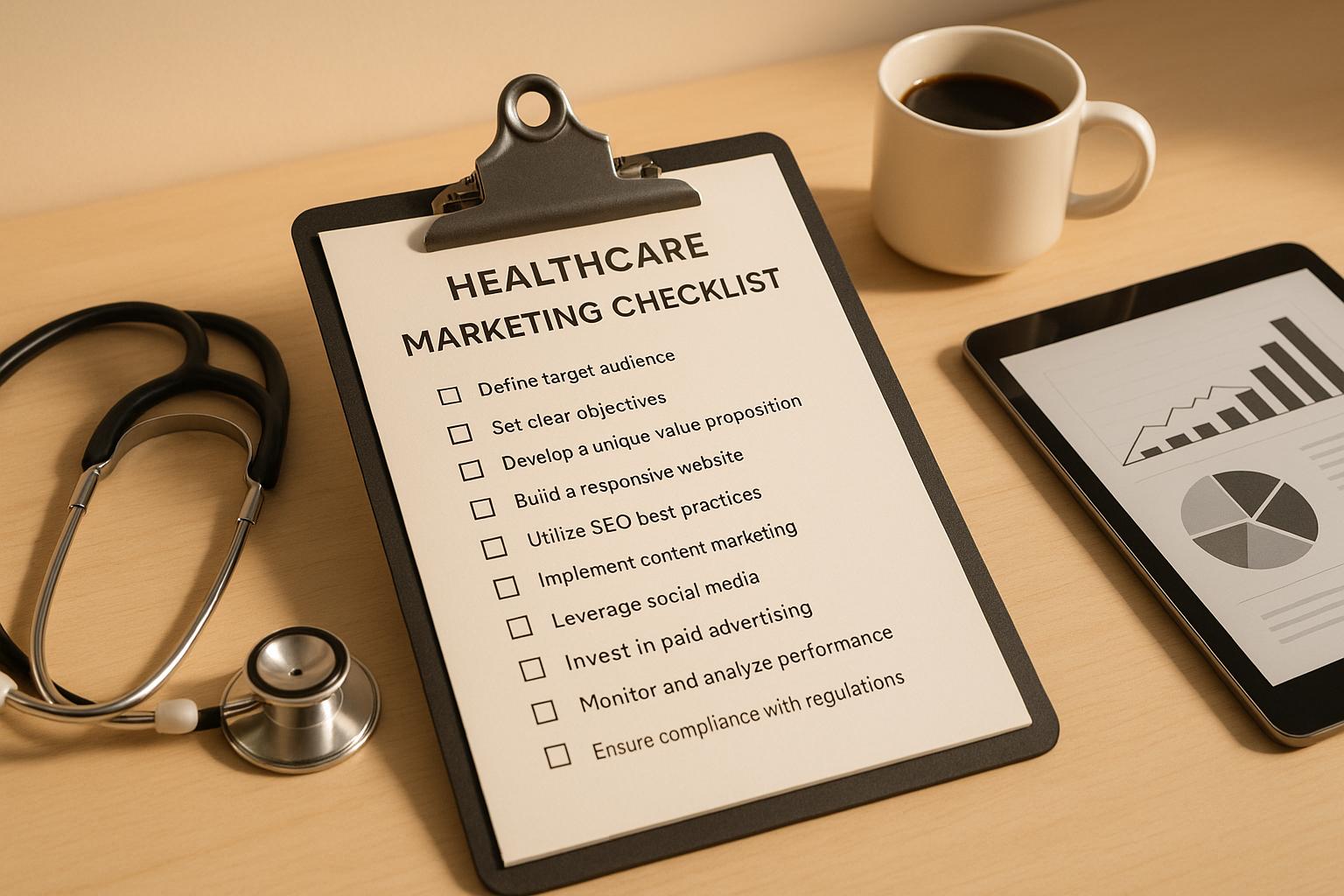
Healthcare marketing is no longer optional. With 75% of Americans researching health questions online and the global healthcare advertising market reaching $44.56 billion, medical practices must prioritize digital strategies to attract patients. This checklist outlines 10 actionable steps to grow your practice while staying compliant with HIPAA regulations and meeting patient expectations.
Key Takeaways:
- Build a mobile-friendly website: Speed, clear navigation, and online booking are must-haves.
- Optimize for SEO: Use patient-focused keywords and local SEO to rank higher in search results.
- Run Google Ads: Target high-intent searches like "urgent care near me."
- Create landing pages: Tailor pages to specific services for better conversions.
- Leverage social media: Share educational content and run targeted ads.
- Use AI and automation: HIPAA-compliant chatbots and follow-ups save time and improve engagement.
- Retarget visitors: Bring back potential patients with privacy-conscious ads.
- Track performance: Monitor key metrics like CPA, conversion rates, and ROI.
- Train your team: Ensure staff understands digital tools and compliance.
- Review campaigns regularly: Stay updated with trends, regulations, and patient needs.
Each step is designed to address common challenges like low traffic, poor conversion rates, and patient retention. By implementing these strategies, you’ll attract more patients, improve trust, and grow your practice effectively.
Healthcare marketing strategies in 2025
Step 1: Build a Patient-Friendly Website
Your website acts as the digital front door to your practice. When prospective patients search for healthcare providers, your website is often their first interaction with your practice, making it a critical part of their decision-making process.
Make Your Site Mobile-Friendly and Fast
A mobile-first design is no longer optional – it’s a necessity. With more patients using smartphones to look up symptoms, find providers, and book appointments, your website must deliver a smooth and intuitive mobile experience. A clunky or slow site can turn potential patients away before they even explore your services.
Speed matters. Your site should load within 3–4 seconds to keep visitors engaged. If it takes longer, they’re likely to leave and look elsewhere. Along with speed, make sure your site offers clear navigation. Patients should be able to find essential information – like contact details, services, insurance policies, and appointment booking options – within a few clicks.
To keep things running smoothly, conduct regular website audits. This includes checking your site’s coding, testing load times across different devices, and reviewing navigation paths to ensure everything works as expected. Small technical issues can snowball into big problems, affecting both user experience and search engine rankings.
"Your website isn’t just a brochure – it’s the hub of your digital strategy. Integrating EHR tools, live chat, and mobile-first design are among the top healthcare technology marketing strategies for 2025 that enhance both patient experience and visibility." – PracticeBeat
A well-structured website doesn’t just look good – it sets the stage for effortless appointment scheduling.
Add Online Appointment Booking
Online appointment scheduling is no longer a luxury – it’s an expectation. Patients now demand the same convenience they get when booking a dinner reservation or a ride-share. When they can schedule appointments instantly without waiting on hold, they’re far more likely to follow through.
Self-scheduling has become the primary entry point for accessing healthcare services. Offering 24/7 booking options for both in-person and virtual consultations ensures you’re meeting modern patient needs.
Virtual consultations are especially popular, with at least 56% of patients preferring them over in-person visits. Your booking system should support both traditional office visits and telehealth appointments. And since many patients book appointments on the go – whether during a commute or a quick break – your scheduling tool must be optimized for mobile use. A smooth, mobile-friendly booking process can make all the difference in turning a visitor into a patient.
Once your booking system is in place, the next step is ensuring patient data stays protected.
Maintain HIPAA Compliance
HIPAA compliance isn’t just a legal box to check – it’s a way to build trust with your patients. It shows that you’re serious about protecting their sensitive information. Since technology and security threats are constantly evolving, staying compliant requires ongoing updates and attention.
Start by securing your website with measures like SSL certificates, secure hosting, and regular security audits. Train your staff on data protection protocols to ensure they’re equipped to handle patient information responsibly. Even seemingly simple features – like appointment booking widgets or newsletter signups – must meet HIPAA standards if they collect health-related data.
Collaborate with web developers who understand healthcare regulations, and choose hosting providers that specialize in HIPAA-compliant services. Implement security protocols that protect patient information without making the user experience cumbersome.
When patients see clear privacy policies, secure connection indicators, and professional handling of their data, they’re more likely to trust your practice. This not only reduces legal risks but also encourages patients to engage with your services online.
Step 2: Research Keywords and Use Healthcare SEO
SEO plays a crucial role in helping patients discover your practice when searching for healthcare services. Think about it: when someone types "pediatrician near me" or "urgent care open now", you want your practice to appear right at the top of their search results. To achieve this, healthcare SEO requires a mix of understanding how patients search and optimizing your online presence.
Find Healthcare Keywords
When it comes to healthcare keyword research, go beyond the obvious terms. Patients often search in ways that reflect their immediate needs. For example, they might type "stomach pain doctor" instead of "gastroenterologist" or "knee injury treatment" rather than "orthopedic consultation."
Focus on high-intent keywords – phrases that suggest someone is ready to take action. These include terms like "book appointment", "urgent care near me", "accepting new patients", or "insurance accepted." People using these phrases aren’t just casually browsing – they’re actively looking for a provider.
Use keyword tools to analyze search volumes and competition levels for terms related to your specialty. Look for long-tail keywords that are specific and less competitive. For instance, "diabetes specialist appointment" is more precise than "family doctor" and can help you connect with patients ready to schedule a visit.
Think about the patient’s journey. Someone searching "symptoms of diabetes" is likely in the early research phase, while someone searching "diabetes specialist appointment" is ready to act. Your content should address both stages – educating patients while guiding them toward booking an appointment.
Don’t overlook voice search optimization either. Many patients use smartphones to ask questions like "Where’s the nearest walk-in clinic?" or "What doctor takes my insurance?" These conversational queries require a different keyword strategy than traditional typed searches.
Once you’ve identified your keywords, it’s time to tailor your efforts to your local audience.
Focus on Local SEO
Local SEO is especially important for healthcare practices since most patients prefer providers nearby. Start by optimizing your Google Business Profile to improve your visibility in local searches.
Claim and update your Google Business Profile with accurate, detailed information. Include your practice name, address, phone number, hours, and accepted insurance plans. High-quality photos of your facility, staff, and waiting areas can also help potential patients feel more comfortable choosing your practice.
Patient reviews play a big role in local search rankings and building trust. Encourage happy patients to leave honest reviews on Google. Be sure to respond professionally to all feedback – whether it’s positive or negative. A practice with plenty of recent, genuine reviews often ranks higher than competitors with fewer or outdated reviews.
Consistency is key across all online directories. Ensure your practice details (like address and phone number) match exactly on your website, Google Business Profile, Yelp, Healthgrades, and other directories. Even small inconsistencies can confuse search engines and hurt your rankings.
To further boost local SEO, create location-specific content on your website. If your practice serves multiple communities, dedicate separate pages to each area. Include local details like neighborhood names, landmarks, and relevant health concerns.
For an extra edge, enhance your listings with structured data.
Add Schema Markup
Schema markup helps search engines better understand your website content. For healthcare practices, this structured data can make your search results more detailed and appealing.
Using medical practice schema markup, you can highlight key information directly in search results, like your specialty, accepted insurance, patient ratings, and appointment booking options. These enhanced listings, known as rich snippets, can make your practice stand out compared to competitors with basic text-only listings.
Start with LocalBusiness schema to include details like your location, hours, and contact information. Add MedicalOrganization schema to specify your specialty, services, and physician credentials.
For practices with multiple providers, use Person schema along with Physician schema to showcase each doctor’s qualifications, specialties, and affiliations. This makes it easier for patients to find the right specialist for their needs.
You can also incorporate Review schema to display star ratings in search results or Event schema if your practice hosts health seminars or wellness programs. These additional schema types can help increase visibility and encourage patient engagement.
Since incorrect schema implementation can negatively affect your site’s performance, it’s a good idea to work with a web developer who has experience in healthcare schema. Once implemented, test your schema using Google’s Rich Results Test tool to ensure it’s working as intended and displaying the right information.
Step 3: Run Targeted Google Ads Campaigns
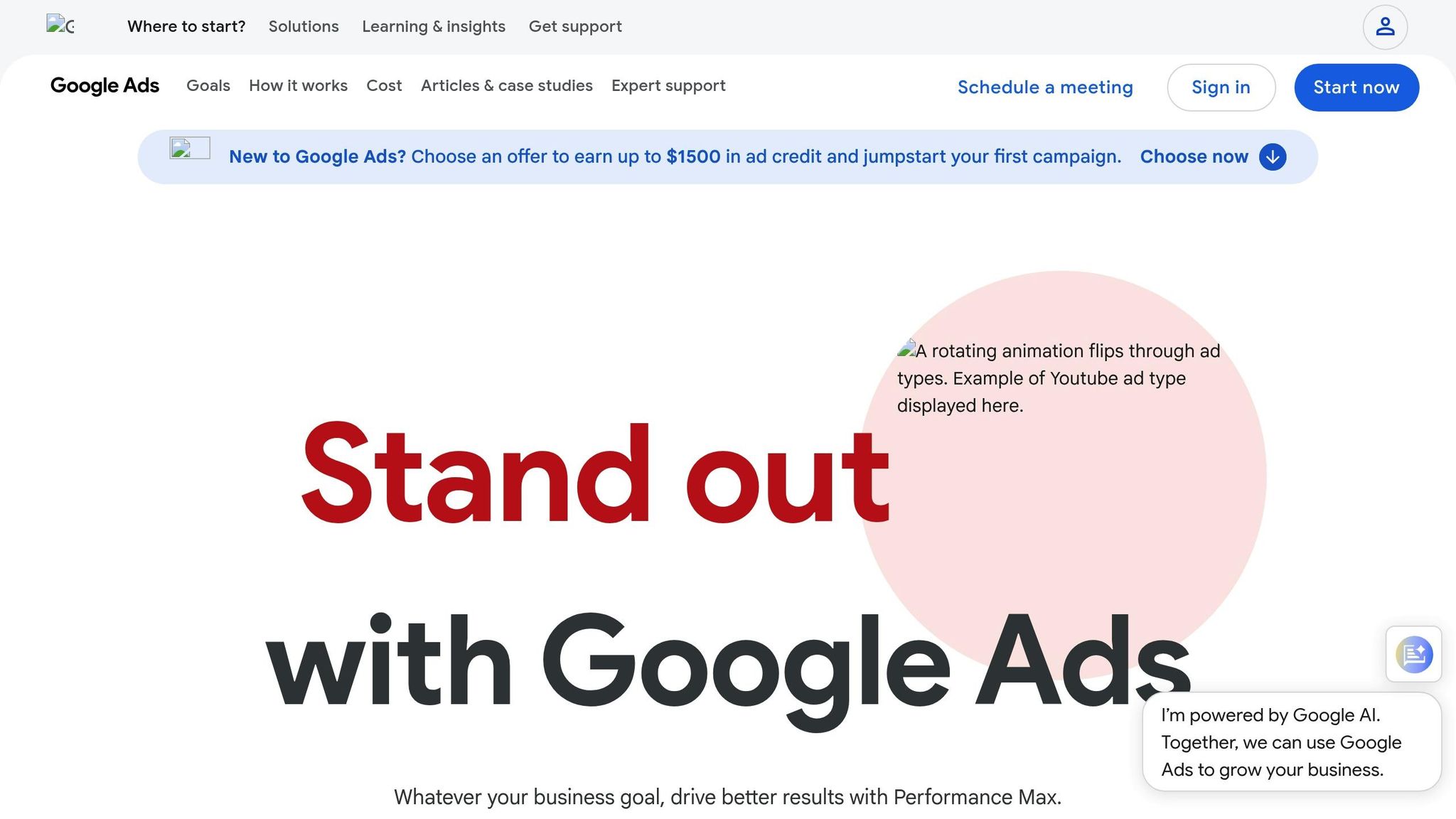
An effective Google Ads strategy is a fast-track way to connect with patients who are actively searching for healthcare services. These ads put your practice at the top of search results, ensuring you’re visible when potential patients need you most. With 89% of healthcare marketers using paid search and 65% of consumers turning to Google before contacting a medical professional, running focused ad campaigns has become a must for growing your practice.
Unlike SEO, which takes time to build momentum, Google Ads deliver instant visibility. Think about someone searching for "urgent care near me" at 2 AM or "pediatrician accepting new patients." With a well-placed ad, your practice can be the first solution they see.
Create Targeted Ad Campaigns
Start by understanding how patients search. Most people don’t use medical jargon – they’re more likely to type "stomach doctor" instead of "gastroenterologist" or "back pain specialist" instead of "orthopedic surgeon."
Tailor your campaigns by specialty and location to ensure you’re reaching the right audience. For instance, if you’re a dermatologist in Phoenix, create focused campaigns for searches like "acne treatment Phoenix", "skin cancer screening Arizona", or "dermatologist near Scottsdale." Use radius targeting around your practice and factor in areas patients are willing to travel from.
Consider the patient’s intent when structuring campaigns. A search like "diabetes symptoms" suggests someone is gathering information, whereas "diabetes doctor appointment" signals they’re ready to book. Match your messaging to their intent – share educational content for research queries and use direct calls-to-action for booking-ready searches.
You can also run brand-specific campaigns to ensure your practice shows up when people search for your name. These campaigns often cost less and convert better since the audience is already familiar with you.
Don’t overlook insurance-focused keywords. Phrases like "accepts Blue Cross", "Medicare provider", or "Aetna dermatologist" resonate with patients who’ve confirmed their coverage, making them more likely to book an appointment.
Recent updates to Google’s advertising policies have opened new doors for healthcare providers. For example, in 2025, Google adjusted its stance on ads for regenerative therapies and similar treatments, allowing them under specific certification requirements. If your practice offers these services, this change could help you attract new patients.
Finally, always stay compliant with Google’s healthcare advertising policies. These rules change frequently, so ensure your ad content and landing pages meet the latest standards.
Monitor ROI and Adjust Spending
Once your campaigns are live, tracking performance is critical to turning clicks into appointments. Regular monitoring and adjustments will help you maximize your budget and improve profitability.
To understand what’s working, track key metrics like conversions, patient acquisition costs, and click-through rates. Set up conversion tracking for actions like phone calls, appointment bookings, and contact form submissions. This data will show which keywords and ads are driving the most patient inquiries.
| Metric | What It Measures | Why It Matters |
|---|---|---|
| Conversion Rate | Percentage of clicks that lead to appointments | Indicates how effective your ads and landing pages are |
| Patient Acquisition Cost | Cost to bring in a new patient | Helps assess campaign profitability |
| Click-Through Rate (CTR) | Percentage of users who click on your ad | Reflects how relevant and appealing your ad is |
| Impressions | Number of times your ad is shown | Measures reach and visibility |
Keep a close eye on your budget allocation. If one campaign consistently delivers lower patient acquisition costs, consider shifting more budget toward it. Use tools like Google Analytics to analyze visitor behavior after they click on your ad. Metrics like time on site, pages viewed, and bounce rate can help you identify which campaigns are attracting engaged visitors.
Call tracking is another valuable tool, especially since many patients prefer calling to schedule appointments. Assign unique phone numbers to different campaigns to measure which ads are driving phone inquiries.
Review your campaign performance weekly. The healthcare advertising space is dynamic – competitor activity and seasonal trends can quickly shift the landscape. Regular adjustments will help you stay competitive.
Finally, refine your bids based on time and location data. If your ads perform better at certain times of day or in specific areas, adjust your bids accordingly. Test variations in headlines, descriptions, and calls-to-action to see what resonates most. Even small tweaks can have a big impact on reducing patient acquisition costs and improving your overall ROI.
Step 4: Build Service-Specific Landing Pages
When someone clicks on your Google Ad, they should land on a page that speaks directly to their search – not your homepage. A dedicated landing page for each service ensures a seamless experience that encourages visitors to book appointments. With 72% of patients using online reviews as their first step in finding a new physician, your landing page should inspire trust and make it easy to take action.
These focused pages address the specific service patients are searching for, eliminating the need to sift through general information. This approach connects the dots between ad clicks and patient engagement, complementing your website and PPC efforts.
Create Pages for Each Service
Each service deserves its own page tailored to patient needs. For example, you might create individual pages for acne treatment, skin cancer screenings, or cosmetic procedures. These pages should answer common patient questions and concerns upfront.
Patients want straightforward details about treatment options, expected outcomes, and costs. For instance, someone considering a skin cancer screening might want to know how the process works, what to expect, and how often they need to schedule appointments.
Use clear, simple language to make the information accessible. Instead of saying "dermatological examination for suspicious lesions", opt for "skin check for unusual moles or spots." This makes the content relatable and easy to understand.
Adding local touches helps build a connection with your community. Mention your location, nearby landmarks, or your involvement in local events to improve local search rankings and foster trust.
Social proof is key to earning patient confidence. Since 86% of people trust online reviews as much as personal recommendations, include testimonials and reviews on your service pages. Real patient stories showcasing positive experiences and outcomes can make a lasting impression.
Don’t forget practical details like accepted insurance plans and payment options. Addressing these upfront removes potential barriers and makes it easier for patients to move forward.
Add Clear Action Buttons
The main goal of your landing page is simple: drive appointment bookings. Every element on the page should guide visitors toward taking that next step.
"Self-scheduling is ‘quickly becoming the new front door to a physician’s practice’ – Relatient "
Place your primary call-to-action (CTA) above the fold, using action-oriented phrases like "Book Appointment Now", "Schedule Your Consultation", or "Get Started Today." Make the button stand out with contrasting colors that grab attention without looking out of place.
Offer multiple ways for patients to connect. Some might prefer online booking, while others may want to call or send a message. Highlight online scheduling as the most prominent option since it’s available 24/7.
Position secondary CTAs throughout the page at logical points. After explaining a treatment, for instance, add a "Learn More" or "Schedule Consultation" button so visitors have multiple opportunities to act.
Adding urgency or value to your CTA can encourage quicker decisions. Phrases like "Same-day appointments available" or "Free consultation" can be effective, provided they are accurate and deliverable.
For mobile users, enable click-to-call functionality. Many patients browse on their phones, and being able to call with a single tap is a convenience they’ll appreciate. Track these calls separately to measure which landing pages drive phone inquiries.
Once your pages are set up, regularly test and refine them to improve performance.
Test Different Page Elements
Testing is crucial to creating landing pages that convert. What works for one practice may not work for another, so experimenting with different elements helps fine-tune your approach. Even small tweaks can make a big difference.
Start by testing your headlines. For example, compare benefit-focused headlines like "Get Clear Skin in 30 Days" with service-focused ones like "Professional Acne Treatment" to see which drives more appointments.
Experiment with social proof placement. Some pages might perform better with testimonials front and center, while others might benefit from before-and-after photos or highlighted doctor credentials. Try moving these elements around to see what resonates most.
Play with your CTA buttons. Test different colors, sizes, and wording. For instance, "Book Now" might outperform "Schedule Appointment", or a larger button might get more clicks.
Also, consider the length of your page. Some services may require detailed explanations to build trust, while others might work better with concise, focused content. Use analytics tools like Google Analytics to monitor visitor behavior – track metrics like time on page, scroll depth, and conversion rates to identify areas for improvement.
Step 5: Use Social Media Marketing
Social media offers healthcare providers a unique chance to connect with their community, build trust, and showcase expertise. Unlike traditional ads, it allows for two-way conversations that make your practice feel more approachable and relatable.
The secret to effective healthcare social media marketing is striking a balance between education and engagement. Your content should be informative yet friendly, making it easier for patients to reach out when they need care.
Focus on platforms where your audience spends time. Facebook is a top choice for healthcare practices, thanks to its local business features and broad user base. Instagram is perfect for visually-driven specialties like dermatology or cosmetic services, while LinkedIn helps you network with other professionals and boost your credibility.
Share Educational Content
Educational posts help position your practice as a reliable source of healthcare information while offering meaningful value to your audience. Your social media channels can become a trusted hub for expert advice that complies with HIPAA guidelines.
Consider sharing seasonal health tips and behind-the-scenes glimpses of your practice. For instance, posts about flu prevention during the fall, sunscreen tips in the summer, or heart health reminders in February resonate well with audiences. Behind-the-scenes content, like team photos from community events or updates about new treatments, builds trust and adds a personal touch.
Patient testimonials and visual content, when used appropriately, can be incredibly impactful. Patient success stories provide social proof, but always ensure you have written consent before sharing any patient-related information.
Live Q&A sessions are another great way to engage. Host events like "Ask the Dermatologist" or "Heart Health Q&A" on platforms like Facebook or Instagram. Promote these sessions ahead of time to attract an audience, and use the opportunity to address common questions while showcasing your expertise.
Debunking health myths is also highly engaging. Create posts that clarify misconceptions in your field, using evidence-based explanations. For instance, a dermatologist might tackle myths about acne treatments or the effectiveness of sunscreen.
Consistency is more important than frequency. Posting two to three times a week with meaningful content is far more effective than daily posts that lack value. Use a content calendar to plan a mix of educational posts, updates about your practice, and community-focused content to maintain a steady, engaging presence.
This consistent, organic strategy builds a solid foundation for future advertising efforts.
Run Targeted Social Media Ads
Social media ads allow you to reach specific patient groups effectively. Facebook and Instagram ads, in particular, offer detailed targeting options based on location, age, interests, and health-related behaviors.
For healthcare practices, location targeting is key. Most patients prefer providers within a convenient distance. Set your ad radius based on typical travel patterns – 10 to 25 miles for primary care, or a wider range for specialized services. Include nearby cities and suburbs to expand your reach.
Demographic targeting helps you connect with the right audience. For example, a pediatrician might target parents aged 25-45, while a cardiologist could focus on adults over 50. Pair this with interest-based targeting to engage people who are already exploring health and wellness topics online.
Run campaigns tailored to specific services, such as annual checkups, specialized treatments, or consultations for new patients. Each campaign should have its own ad design and landing page that aligns with the service being promoted.
Video ads often perform better than static images. Keep videos short – under 60 seconds – and use them to introduce your practice, explain procedures, or share patient testimonials. Don’t forget to include captions since many users watch videos without sound.
Retargeting ads are a smart way to re-engage potential patients who visited your website but didn’t schedule an appointment. Create custom audiences of these visitors and show them ads that highlight your services, share success stories, or promote special offers like free consultations.
Start with modest daily budgets, around $20-$50, while testing different ad formats and audience segments. Once you identify what works best, gradually increase your spending on the most effective campaigns.
Measure success by tracking appointments, website clicks, and phone calls generated from your ads. Use tools like Facebook’s conversion tracking and Google Analytics to see which campaigns are driving actual patient bookings – not just likes or shares.
Finally, use A/B testing to refine your ads over time. Experiment with different headlines, images, calls-to-action, and audience settings to see what resonates most with your audience. Even small improvements in click-through rates can make a big difference in your results.
sbb-itb-f6ab3ee
Step 6: Use AI Tools and Automation
AI and automation can reshape how healthcare practices operate by simplifying routine tasks and enhancing patient interactions. These technologies free up your team to focus on patient care while ensuring smooth, consistent communication throughout the patient’s journey. It’s critical to select HIPAA-compliant solutions to safeguard patient data while delivering tailored experiences. With 90% of healthcare executives predicting a surge in digital technology use by 2025, practices that embrace AI early can gain a competitive edge.
Start with straightforward automation tools to build your team’s confidence before moving on to more advanced AI systems. A good next step is exploring AI chatbots to handle routine inquiries effortlessly.
Add AI Chatbots for Patient Questions
AI chatbots can provide round-the-clock support, answering common questions and even scheduling appointments outside office hours. They can also guide patients to relevant resources and manage basic appointment requests through your website or mobile app.
When implementing chatbots, maintaining HIPAA compliance is essential. Currently, only 29% of U.S. healthcare organizations are fully HIPAA compliant. Chatbots must never collect or store Protected Health Information (PHI) in unsecured systems. If a patient asks a sensitive question, the chatbot should redirect them to a healthcare provider rather than attempting to offer medical advice.
To ensure compliance, choose a HIPAA-compliant platform that includes secure storage, encryption, audit trails, and a signed Business Associate Agreement (BAA). All data processed by the chatbot should be encrypted both in transit and at rest to prevent unauthorized access.
Design your chatbot to handle common scenarios effectively. For example, it can act as a symptom checker by asking relevant questions and directing patients to the right specialists. It could also remind patients to take their medications on time or help them contact your office for prescription refills. Limit the chatbot’s data collection to essential information and enforce strict access controls. Additionally, ensure your entire team is trained on HIPAA requirements related to chatbot operations to handle data properly.
Set Up Automated Follow-Ups
Building on chatbot support, automated follow-up systems can improve patient engagement by maintaining consistent communication throughout their healthcare journey – from initial contact to post-treatment care. These systems can also help boost patient retention. However, HIPAA compliance must remain a priority for all automated communications. Any message containing PHI should be securely encrypted, and patients must opt in to receive such messages. Offering preference centers can also let patients control how much information they share for marketing purposes.
Start with simple workflows like appointment reminders and post-visit follow-ups, then expand into more complex, multi-channel campaigns. Segmenting patients by condition, demographics, or stage of care allows you to tailor messages to resonate with specific groups.
You can also create dynamic nurture programs that adapt to patient behaviors, such as email opens, website visits, or appointment attendance. For instance, patients who engage with wellness tips could receive personalized health guides, while those who miss appointments might get gentle reminders to reschedule.
Use multiple communication channels – email, SMS, and in-app notifications – to reach patients where they’re most active. However, be mindful to balance automation with a personal touch to keep communications genuine and avoid overwhelming recipients.
Incorporate automated feedback loops like post-appointment surveys or satisfaction check-ins. These not only provide valuable insights for improving services but also show patients that their opinions matter. Track healthcare-specific metrics, such as missed appointments, treatment adherence, and referral rates, instead of relying solely on generic metrics like open rates. Predictive analytics can be a helpful tool, sending reminders for annual check-ups or preventive care based on patients’ medical history and scheduling patterns.
Lastly, regularly review your automated workflows to adjust triggers, messages, and timing as needed. This ensures your system stays effective and aligned with evolving patient needs and communication preferences.
Step 7: Run HIPAA-Compliant Retargeting Campaigns
Retargeting campaigns can help bring back potential patients who visited your website but didn’t schedule an appointment. However, healthcare practices face unique challenges when it comes to staying within HIPAA guidelines. The goal is to design retargeting strategies that encourage conversions while prioritizing patient privacy.
To remain compliant, focus on general website interactions and behavioral data instead of targeting specific health conditions. This approach requires thoughtful planning but can still yield strong results when done right.
Avoid targeting ads based on particular service pages, such as “diabetes treatment” or “mental health counseling.” Instead, prioritize broader engagement patterns that respect privacy and maintain compliance.
With these principles in mind, audience segmentation becomes a key part of any effective retargeting campaign.
Create Audience Segments for Ads
Careful audience segmentation allows you to target potential patients effectively while adhering to HIPAA standards. By focusing on general behavioral trends, you can create impactful campaigns without violating privacy regulations.
Start by segmenting visitors based on their engagement levels. For example, you could create groups for people who spent over two minutes on your site, visited multiple pages, or started but didn’t finish filling out an appointment form.
Geographic targeting is another effective strategy for healthcare practices. Most patients prefer local providers, so segment audiences based on zip codes or areas within a reasonable driving distance. This ensures you’re reaching the right people without breaching privacy rules.
You can also segment by device type and time of visit. Mobile users browsing in the evening might be casually researching care options after work, while desktop users during business hours could be comparing providers more thoroughly. Tailor your ad messaging and schedules to match these patterns.
Another valuable segmentation method is separating new visitors from returning ones. First-time visitors might need more information about your practice and services, while returning visitors could be ready for appointment-focused ads.
Consider creating segments for those who interacted with specific site features, like your patient portal login page or contact forms. These actions often signal a higher level of interest in your services.
Time-based segments can also improve your campaign’s effectiveness. For instance, divide your audience into recent visitors (within the last 7 days) and those who visited 8-30 days ago. Recent visitors might respond to gentle reminders, while older visitors may need stronger incentives or updates about your services.
To avoid overwhelming potential patients, use frequency capping to limit how often someone sees your ads. Showing 3-5 ads per person per week across platforms is a good rule of thumb, as healthcare decisions often take time and careful thought.
Lastly, make sure to exclude current patients from your retargeting campaigns. This not only prevents privacy issues but also avoids wasting your ad budget. Use your patient management system to create exclusion lists, ensuring all data transfers are secure and HIPAA-compliant.
As you refine your campaigns, test different ad formats and messages for each segment. Monitor performance closely, and adjust your strategy based on real-world results rather than assumptions.
Step 8: Track and Improve Marketing Performance
To grow patient acquisition and maximize revenue, tracking your marketing performance is essential. By analyzing data consistently, you can pinpoint what works, refine your strategies, and improve your return on investment (ROI). The trick is to focus on the right metrics and tools, avoiding unnecessary data that doesn’t lead to actionable outcomes.
Watch Key Performance Numbers
Concentrating on meaningful metrics ensures your marketing dollars are spent wisely. Here are some critical numbers to monitor:
- Cost per acquisition (CPA): This tells you how much you’re spending to bring in each new patient. Your ideal CPA depends on your specialty and the long-term value of your patients.
- Conversion rates: These show how well your marketing funnel turns potential patients into actual appointments. Tracking conversion rates at every stage of the funnel can uncover areas for improvement that lead to big results.
- Patient lifetime value (PLV): PLV helps determine how much you can afford to spend on acquiring a patient. Calculate it by multiplying the average visit value by visit frequency and retention period.
- Return on ad spend (ROAS): This measures how much revenue you’re generating for every dollar spent on advertising. A high ROAS means your campaigns are paying off.
- Appointment show rates: If your campaigns attract patients who don’t follow through with appointments, it’s time to revisit your targeting or messaging.
- Source attribution: Use tools like unique phone numbers, dedicated landing pages, or tracking codes to identify which marketing channels are driving results.
- Geographic performance: Analyze data by zip code or neighborhood to fine-tune your local SEO and targeted ads.
Once you’ve zeroed in on these metrics, the right tools can help you track and optimize your efforts in real-time.
Use Real-Time Analytics Tools
Sophisticated analytics tools are a game-changer for healthcare marketing. They allow you to monitor trends, fix issues quickly, and double down on strategies that work. Here are some tools to consider:
- Google Analytics 4: Provides insights into website performance. Set up goal tracking for actions like form submissions, phone calls, or appointment bookings.
- Call tracking systems: Many patients still prefer calling over filling out online forms. Tools with dynamic number insertion can assign unique numbers to campaigns, helping you see which ones drive the most calls and appointments.
- Heat mapping tools: Platforms like Hotjar or Crazy Egg show how users interact with your website. They help identify obstacles in the appointment booking process.
- Medical PPC Agency’s analytics platform: Designed for healthcare practices, this platform tracks patient acquisition costs, appointment conversions, and revenue attribution while ensuring compliance.
- Automated reporting: Set up weekly or monthly reports to stay updated on key metrics. These reports can compare performance across time periods and against industry benchmarks.
- Social media analytics: Track engagement and click-through rates to see what content resonates most. Educational posts often outperform promotional ones in driving inquiries.
- Real-time alerts: Get notifications about sudden changes, like a spike in traffic or a drop in conversions. This allows you to act quickly and avoid wasting your budget.
- Attribution modeling: Understand the full patient journey by tracking touchpoints across multiple channels. This ensures every marketing effort gets the credit it deserves.
- A/B testing: Continuously test ad copy, landing pages, and call-to-action buttons. By testing one element at a time over a sufficient period, you can make data-backed decisions for better results.
Step 9: Train Your Team on Digital Marketing
To make your digital marketing strategy work seamlessly, every team member – from the front desk to clinical staff – needs to understand their role. Without this alignment, you risk inconsistent messaging and missed opportunities.
Investing in continuous education is key. Regular training sessions and workshops help keep your team up to date with the latest digital trends, compliance standards, and AI-driven marketing tools. With the fast pace of change in the marketing world, staying informed is not optional – it’s essential. Here’s how you can equip your team to contribute effectively and consistently.
Teach Staff Marketing Tools and Methods
Start by conducting a skills audit to pinpoint areas where your team needs support. This helps you design targeted training programs that address specific gaps.
- Front desk staff: Train them on appointment booking systems, the basics of Google Ads, and landing page strategies. This ensures they understand the patient journey and can support your broader digital efforts.
- Clinical staff: Focus their training on patient engagement tools, such as mastering the patient portal and automated follow-up systems. This helps create a seamless and engaging experience for patients.
- Data analytics: Teach key team members how to interpret analytics reports, track metrics like appointment conversion rates, and know when to flag trends or concerns for management. Data-driven decision-making is crucial for staying competitive.
- Social media: Even if only a few staff members manage your social channels, everyone should understand your social media guidelines. This ensures consistent messaging and prepares staff to handle patient inquiries that come through these platforms.
Don’t forget to integrate HIPAA compliance into your training. Make sure everyone knows what patient information can and cannot be shared online, how to handle reviews and testimonials, and the correct procedures for digital communication with patients.
Improve Team Communication
Clear and consistent communication across your entire team builds trust and strengthens your marketing efforts. To achieve this, consider the following:
- Develop standardized scripts to ensure uniform messaging across departments.
- Hold regular cross-department meetings to keep everyone informed about current campaigns and their performance. Use these sessions to share success stories, address challenges, and collect feedback.
- Schedule ongoing training sessions to keep up with the latest marketing trends. When launching new campaigns, brief clinical staff in advance so they’re ready to address patient questions in a consistent way.
For specialized training beyond your team’s expertise, bring in external professionals – like marketing consultants or industry experts. Document all training materials and provide quick-reference guides to make it easy for team members to access the information they need.
Step 10: Review and Update Campaigns Regularly
Your healthcare marketing strategy isn’t a "set-it-and-forget-it" kind of thing. It demands consistent attention to keep campaigns performing well and staying compliant with regulations.
Think of it like regular check-ups for your health – frequent reviews ensure your campaigns stay in top shape.
Schedule Regular Campaign Reviews
Set up a routine to assess your campaigns on different levels:
- Monthly Audits: Dive into key performance metrics like CPA, conversion rates, and ROAS for each channel. Look for patterns in patient behavior, seasonal trends, or any shifts in campaign performance that might require tweaking.
- Quarterly Deep Dives: Go beyond the numbers. Map out patient journeys to refine your funnel, evaluate keyword performance, and test whether your landing pages and messaging still resonate with your audience. This is also a good time to check if your messaging aligns with your target demographics.
- Annual Strategy Reviews: Step back and look at the big picture. Reassess your target audience, analyze competitor strategies, and ensure your marketing goals align with your practice’s growth plans. You could even survey patients to gather feedback on their experiences with your marketing touchpoints.
To stay ahead, consider using real-time analytics tools and set up automated alerts for performance dips. For example, if you’re running Google Ads, monitor your Quality Scores monthly and adjust your ad copy, keywords, or landing pages if you notice a decline. Don’t just gather insights – document them and set actionable timelines to turn observations into improvements.
Stay Current with Industry Changes
Keeping your campaigns effective isn’t just about internal reviews. External factors, like industry trends and regulatory updates, can have a big impact.
- Regulatory Updates: Healthcare marketing regulations, like HIPAA guidelines, are always evolving. Stay informed by subscribing to industry publications and regulatory updates to ensure compliance.
- Platform Changes: Algorithm updates from platforms like Google can affect SEO rankings and ad performance, while social media platforms frequently tweak their advertising policies. Follow announcements from these platforms and adjust your strategies accordingly.
- Shifting Patient Expectations: Trends like the rise of telemedicine, demand for online appointment booking, and preference for digital communication are reshaping healthcare marketing. Stay ahead by monitoring industry reports and patient behavior studies.
- Advancements in Technology: New tools for patient engagement, analytics, and advertising are constantly emerging. Review these quarterly to see which ones could enhance your campaigns.
Engage with healthcare marketing communities and attend industry events to network with peers and learn about best practices. These connections often provide early insights into changes and trends that could impact your strategy. You might also consider collaborating with marketing professionals who specialize in healthcare to navigate compliance challenges and adopt new strategies effectively.
Conclusion
Achieving success in healthcare marketing takes time, but these 10 steps provide a strong starting point for steady, long-term growth. Each step works together – whether it’s building a user-friendly website or regularly reviewing your campaigns – to create a strategy that meets the unique needs of healthcare providers.
The secret? Consistent execution and careful analysis. Your HIPAA-compliant, mobile-ready website becomes the cornerstone, attracting qualified traffic through SEO, Google Ads, and social media. From there, service-specific landing pages help turn visitors into patients, while AI tools and automation streamline routine tasks like appointment booking and patient inquiries.
What sets successful practices apart is their focus on data-driven decisions. Tracking key metrics, understanding patient behavior, and adjusting campaigns lead to measurable results. Training your team on these tools ensures everyone is aligned, enhancing the overall patient experience.
As healthcare regulations and patient expectations continue to shift, practices that follow this checklist and stay adaptable to changes will be better equipped to bring in new patients, keep current ones, and build stronger community connections.
Take these insights and prioritize the steps that address your biggest challenges. Whether it’s enhancing your website for mobile users, launching targeted Google Ads, or integrating AI chatbots, every move brings you closer to your goals. This effort translates into more patients, better retention, and a stronger digital presence in your local area.
FAQs
What steps can healthcare practices take to ensure their digital marketing complies with HIPAA regulations?
Healthcare providers can align their digital marketing efforts with HIPAA regulations by taking a few essential steps to safeguard patient privacy and maintain compliance:
- Secure patient data: Use encryption, strict access controls, and other robust security measures to protect sensitive information.
- Get clear patient consent: Always obtain explicit consent before using any protected health information (PHI) for marketing purposes.
- Rely on de-identified data: Whenever possible, use data that has been stripped of identifying details to reduce risks.
- Establish Business Associate Agreements (BAAs): Ensure all vendors or partners handling PHI sign BAAs to clarify their responsibilities under HIPAA.
- Provide regular training: Educate staff on HIPAA requirements to promote awareness and compliance.
These steps not only help healthcare organizations stay compliant but also foster trust and confidence among patients.
How can AI and automation improve patient engagement in healthcare marketing?
AI and automation are transforming how healthcare providers engage with patients, making interactions more seamless and tailored. AI-powered chatbots are a game-changer, handling tasks like scheduling appointments, answering frequently asked questions, and offering round-the-clock support. This means patients can reach out to their providers anytime, without delays or hassle.
On top of that, predictive analytics takes patient care a step further by anticipating needs. This allows for more proactive care and outreach that feels personal and relevant.
Automation tools also play a big role in keeping patients engaged. For example, healthcare providers can deliver personalized content – like health tips or reminders – based on individual preferences. Automated systems can also send timely appointment reminders, follow-up messages, and even satisfaction surveys. These consistent touchpoints not only improve communication but also help build trust and retention.
By using AI and automation effectively, healthcare providers can strengthen their relationships with patients while streamlining their own operations. It’s a win-win for both sides.
What are the best ways for healthcare providers to track and measure their digital marketing success?
To evaluate how well digital marketing efforts are working, healthcare providers should keep an eye on key performance indicators (KPIs) such as website traffic, social media engagement, and conversion rates. These metrics give a clear picture of how campaigns are performing. Beyond that, tools that track lead generation, patient acquisition costs, and brand mentions offer deeper insights into the overall impact of your marketing.
For a more patient-focused perspective, incorporating patient surveys and feedback can reveal how satisfied patients are and highlight areas that need improvement. Regularly analyzing these metrics not only helps refine your strategies but also ensures they stay aligned with your overall objectives.